
Permit online, crew in town. Solar panel installation in San Jose, by our installation team based right here.
- Based in San Joseour installation team, covering all of California
- Online permitnormally issued as soon as it’s submitted, for a qualifying rooftop system
- CSLB 1165009California electrical contractor license (C-10)
What happens when San Jose’s power goes out?
Panels alone go dark with the grid, so no power flows onto lines that crews are working on. A home battery keeps the circuits you pick running, and the next sunny day tops it up. In San Jose an outage can be planned: when high winds raise the wildfire risk, PG&E may shut lines off on purpose, and in October 2019 its shutoffs reached circuits serving parts of San Jose twice.
- Panels alone
- Off with the grid, and back on when it is.
- Panels and a battery
- The fridge, lights, Wi-Fi, chargers and a few outlets run for about 27 hours on one Powerwall 3, refilled by the panels each sunny day.
The outage record
October 26 to November 1, 2019The late-October shutoffs
18%
968,000 customers shut off across both, the last restored 6 days after the first went out.
October 9 to 12, 2019The early-October shutoff
13%
732,000 customers shut off, the last restored 3 days later.
Each bar is the share of PG&E’s customers across northern and central California (its 2019 average) whose power it shut off; circuits serving parts of San Jose were among them both times. Figures from PG&E’s amended post-event reports to the California Public Utilities Commission and its 2019 annual report, checked November 2026.
How does going solar work in San Jose?
About two months from signing. We file the city’s permit online, send your plans to your HOA if you have one and apply to PG&E. Then our own San Jose team installs, the city inspects and PG&E gives permission to operate.
- Permit, HOA and utility. About 4 to 6 weeks.
- Installation. Usually 1 to 2 days, by our crew.
- Inspection and switch-on. About 2 to 3 weeks, then the utility gives permission to operate.
In San Jose
- The permit
- A building permit from the City of San José’s Building Division (Planning, Building and Code Enforcement), covering the panels and any home battery. Online, only the owner or a licensed contractor with a current City of San José business tax certificate can apply.
- Online, same day
- For a qualifying rooftop system on a single-family home, duplex or townhouse, the permit is filed on SJPermits.org and normally issued as soon as it’s submitted. The panels must weigh under 5 pounds per square foot with their frames, put less than 40 pounds on any one support and sit no more than 18 inches above the roof, with no ballast.
- Plan review
- Any other system goes through the city’s Standard Plan Review, with plans uploaded for staff to check. A ground-mounted system also needs a Planning Permit.
- Batteries
- For the online permit, a battery is anchored with a city-approved detail or master file. The bracket anchorage gets its own inspection, typically before the battery is installed.
- Power lines
- PG&E, which connects your system and gives permission to operate. San José Clean Energy (SJCE), the city’s own power provider, supplies your electricity by default.
- What you send back
- Credited by the hour under the Solar Billing Plan (NEM 3.0): SJCE credits the generation part and PG&E the delivery part, on one PG&E bill.
California law on HOAs and solar
Under the Solar Rights Act (Civil Code §714), HOA rules that effectively ban or restrict solar are void. An HOA can set reasonable rules, but not ones that add more than $1,000 to the cost or cut output by more than 10%, and an application it hasn’t denied in writing within 45 days is approved. The city can’t hold your permit for the HOA, either.
Permit rules from the City of San José’s Solar & Storage Battery Projects page (updated April 2026) and Who Can Apply page, and San José Clean Energy’s Going Solar page; power and billing from San José Clean Energy and PG&E’s Schedule NBT; Civil Code §714 and Government Code §65850.5. Checked November 2026. Homes outside city limits follow their own city’s or Santa Clara County’s permits.
What does solar cost in San Jose?
Find your monthly kWh on your electricity bill and read across: that’s the system a San Jose roof needs to cover 90 to 100% of your use, and its price before incentives. At the California average of 503 kWh a month, that’s about 3.4 kW, roughly $7,100 to $8,600.
Incentives: California has no state solar credit, and the 30% federal credit for homeowners ended with 2025. Systems completed before January 1, 2027 stay off your property tax assessment. San José Clean Energy’s battery rebate is closed, but its Peak Rewards program pays $8 per kWh of battery you enroll, up to $240, plus quarterly bill credits.
California incentives in fullBy monthly use
503 kWhCalifornia average
System3.4 kW
Panels8
Before incentives$7,100 to $8,600
1,500 kWh
System10.1 kW
Panels24
Before incentives$21,100 to $25,700
2,000 kWh
System13.5 kW
Panels31
Before incentives$28,100 to $34,200
2,500 kWh
System16.9 kW
Panels39
Before incentives$35,100 to $42,800
Work it out for your own bill
Add up the kWh on your last 12 bills, or multiply one month by 12.
- System in San Jose
- 3.4 kW8 panels
- At one IntegrateSun project’s price ($2.08/W)
- $7,100
- At San Jose’s average ($2.53/W)
- $8,600
- Before any incentives
- $7,100 to $8,600
Sizing: San Jose’s 6.08 peak sun hours a day (PVWatts for Los Angeles, California’s representative city, used until San Jose’s own is fetched) and 440-watt panels, to cover 90 to 100% of a year’s use. Prices before incentives: one IntegrateSun project (16.72 kW, cash price) and EnergySage’s San Jose average as of November 2026. California average use: U.S. Energy Information Administration, 2024. An estimate, not a quote: your roof and equipment set the real price.
What does your extra solar earn in San Jose?
Usually less than the power you buy, so solar pays best when your home uses it. San Jose homes on the Solar Billing Plan (NEM 3.0) get hourly export credits: San José Clean Energy credits the generation part of each kWh you send back, and PG&E the delivery part. Both show on your one PG&E bill.
We look at your rate and when your home uses power before we size your system and decide on a battery.
SJCE’s solar billing rules (opens in a new tab)Opted out of SJCE? If PG&E supplies your power, PG&E credits the whole export, and pays less for year-end surplus than SJCE does.
How solar is credited in San Jose
- Billing plan
- The Solar Billing Plan, for systems that applied from April 15, 2023. Solar homes go on PG&E’s Electric Home rate (E-ELEC).
- Export credit
- Set for each hour, by month and by weekday or weekend, from the state’s avoided-cost values, and usually below what power costs you. A system that applies by the end of 2027 keeps its values for 9 years.
- Bonus credit
- 0.88¢ a kWh on top for a home whose PG&E application is completed in 2026, 0.44¢ in 2027, then none. It stays fixed for 9 years from switch-on.
- Peak hours
- 4 to 9 PM every day, when E-ELEC prices power highest. Summer runs June through September.
- Carryover
- Credits roll over month to month. SJCE trues up every April; PG&E trues up the delivery side each year on your system’s switch-on anniversary.
- Year-end surplus
- Generate more than you use over the year and SJCE pays 3.575¢ a kWh for the surplus, as a bill credit (from April 1, 2026). SJCE says that’s 25% more than PG&E pays.
- Fixed charge
- PG&E’s base services charge: $0.79343 a day, about $24 a month, for most homes, and less with CARE or FERA. Hourly export credits can’t pay it down; only the bonus credit can.
How the credits shape your system
Panels only
Sized close to your yearly use. Midday surplus earns hourly credits, and if the panels make more than you use over the year, the surplus earns 3.575¢ a kWh at the April true-up.
Panels and a battery
Midday surplus charges the battery, which covers the 4 to 9 PM peak and keeps chosen circuits on through a shutoff.
San José Clean Energy’s Solar Billing page and FAQ (its net surplus rate as of April 1, 2026); PG&E’s Schedule NBT and Schedule E-ELEC (base services charge effective June 1, 2026). Checked November 2026.
How much do solar panels cost in San Jose?
About $7,100 to $8,600 before incentives for a home using the California average of 503 kWh a month, which takes about 3.4 kW of panels. At 1,500 kWh a month it’s about 10.1 kW, $21,100 to $25,700. EnergySage’s San Jose average is $2.53 a watt (November 2026); one IntegrateSun project came in at $2.08.
See prices by monthly useDo I need a permit for solar panels in San Jose?
Yes, a building permit from the city, for the panels and any battery. For a qualifying rooftop system on a single-family home, duplex or townhouse, it’s filed online at SJPermits.org and normally issued as soon as it’s submitted. Other systems go through plan review, and a ground mount also needs a Planning Permit. We apply for it for you.
How an install runs hereHow does San José Clean Energy credit solar?
Much like PG&E, with a better year-end rate. On the Solar Billing Plan, SJCE credits the generation part of what you send back at PG&E’s published export values, and PG&E credits the delivery part. Credits roll over each month, SJCE trues up every April, and surplus over the year earns 3.575¢ a kWh, which SJCE says is 25% more than PG&E pays. It also says 75% of its solar customers use more than they generate.
San Jose’s solar billing rulesWill solar panels keep my power on in a PG&E shutoff in San Jose?
Only with a battery. Panels alone shut down with the grid, including when PG&E cuts power in high winds to lower the wildfire risk. With a battery, the circuits you pick stay on: one Powerwall 3 runs the fridge, lights, Wi-Fi, chargers and a few outlets for about 27 hours, and the panels refill it each sunny day. PG&E’s shutoffs in October 2019 reached circuits serving parts of San Jose twice; the two in late October together cut power to 18% of its customers.
PG&E’s shutoff recordIs there a rebate for home batteries in San Jose?
Not right now: San José Clean Energy’s EcoHome battery rebate is closed to new applications. Its Peak Rewards program still pays for an eligible battery: $8 per kWh you enroll, up to $240, then quarterly bill credits for letting SJCE use it each evening, never below 20% charge. California’s general SGIP battery rebate is closed too.
How long does it take to go solar in San Jose?
About two months from signing. Paperwork comes first: the city permit, any HOA approval and the PG&E application run about 4 to 6 weeks, though a qualifying city permit itself is normally issued online as soon as it’s submitted. Our crew then installs in 1 to 2 days, and the city inspection and PG&E’s permission to operate follow in about 2 to 3 weeks.
Can my HOA stop me from installing solar in San Jose?
No. California’s Solar Rights Act voids HOA rules that effectively ban or restrict solar. An HOA can still ask for reasonable changes, as long as they don’t add more than $1,000 to the cost or cut output by more than 10%, and an application it doesn’t deny in writing within 45 days is approved, unless it asked for more information. We prepare and file the request.
Does IntegrateSun have a team in San Jose?
Yes. Our installation team is based in San Jose and covers all of California, along with our teams in Los Angeles and Sacramento. Our headquarters is in Houston. IntegrateSun LLC holds Contractors State License Board license 1165009 for electrical work (class C-10).
Where we install in California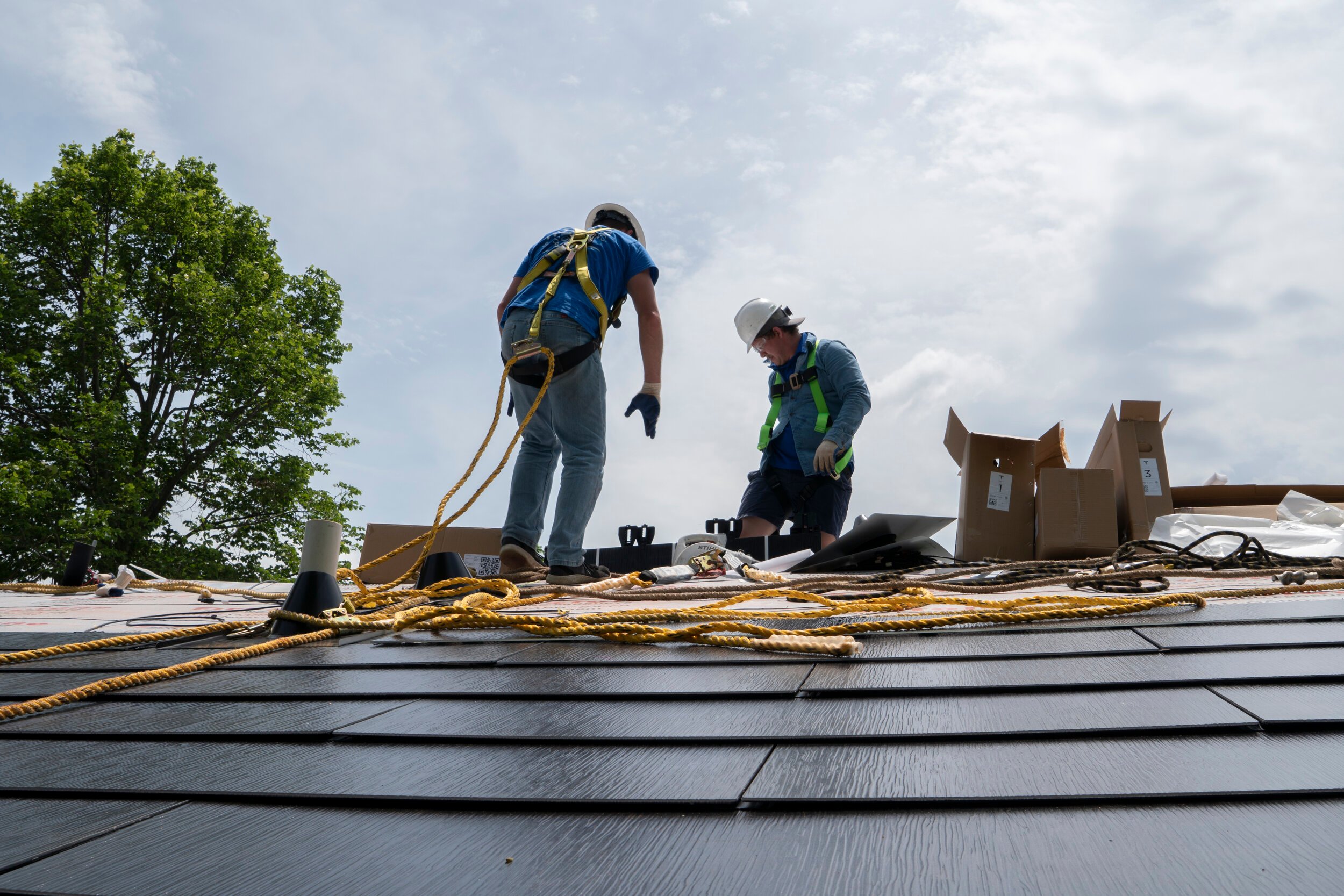
Ready to make your own power?
Get a free quote built around your roof and your last year of bills, or call and talk it through with our team.