
Built for SMUD, by a Sacramento crew. Solar panel installation in Sacramento, designed around SMUD’s Solar and Storage Rate and installed by our team based here.
- 9.6¢ a kWhwhat SMUD pays for solar you send back, day or night
- Our Sacramento teamone of our three California installation teams
- CSLB 1165009California electrical contractor license (C-10)
What happens when Sacramento’s power goes out?
Panels alone go dark with the grid, so crews can repair lines safely. A home battery keeps the circuits you pick running and refills from the roof when the sun is out. Here the threat is winter wind: the storm of January 8, 2023 left 53% of SMUD’s customers without power at once, a week after the New Year’s Eve storm, and in February 2024 another windstorm cut power to 200,000 customers.
- Panels alone
- Off with the grid, and back on when it is.
- Panels and a battery
- The fridge, lights, Wi-Fi, chargers and a few outlets run for about 27 hours on one Powerwall 3, refilled by the panels each sunny day.
The outage record
January 2023The January 8 storm
53%
345,000 customers out, about 60,000 still out that afternoon.
December 2022The New Year’s Eve storm
28%
180,000 customers out, over 99% restored 3 days later.
Each bar is the share of SMUD’s 653,273 customer accounts (year-end 2022) without power at the storm’s height. Figures from SMUD’s releases of January 3 and 8, 2023 and its 2022 annual report, checked 19 November 2026. The January row’s 60,000 is SMUD’s count at 3:45 PM on January 8.
How does going solar work in Sacramento?
About two months from signing. SMUD approves the connection first, because the city wants SMUD’s letter with the permit application. The city’s permit then runs through SolarAPP+, which checks a standard home system against code online. Once it’s installed, the city inspects it, and SMUD makes its own safety check, fits its meter and gives permission to operate.
- Permit, HOA and utility. About 4 to 6 weeks.
- Installation. Usually 1 to 2 days, by our crew.
- Inspection and switch-on. About 2 to 3 weeks, then the utility gives permission to operate.
In Sacramento
- Permit
- A residential solar permit from the City of Sacramento’s Community Development Department (Building Division, 300 Richards Blvd.), applied for on the city’s Public Permit Portal with its solar application, SMUD’s interconnection letter and the plans.
- Instant review
- SolarAPP+, which the city has adopted for solar, solar with batteries, main panel upgrades and main breaker derates on one- and two-unit homes and ADUs. A licensed contractor’s design is checked online, and the permit is issued once the fees are paid. Ballasted systems can’t use it.
- Standard review
- Anything SolarAPP+ can’t take goes to the city’s plan review; fees are invoiced on approval. Tile roofs, and roofs with more than two overlays of roofing material, need structural calculations stamped and signed by a California-licensed design professional.
- Inspections
- The city inspects the installed system, booked on the same portal. SMUD then makes a final safety inspection and installs its two-way meter, at no cost to you.
- Connection
- SMUD, the city’s community-owned utility. Its one-time interconnection fee is $500 for a home system under 10 kW and $1,000 up to 20 kW, and it allows a system sized to cover up to 110% of your home’s use.
- Exports
- 9.6¢ a kWh under SMUD’s Solar and Storage Rate, at any hour. NEM 3.0 doesn’t apply.
California HOA rules
California’s Solar Rights Act voids HOA rules that ban or effectively restrict solar. An HOA can still set reasonable rules, but not ones that add more than $1,000 to a solar panel system’s cost or cut its efficiency by more than 10%. It has to decide in writing, and an application it hasn’t denied in writing within 45 days counts as approved, unless the delay is a reasonable request for more information. We file it for you.
City of Sacramento: Residential Solar page and Submission Checklist for Residential Photovoltaic Installations (CDD-0198, revised January 2026). SolarAPP+’s list of jurisdictions. SMUD’s solar getting-started steps, fee schedule (effective June 1, 2026) and Rate Schedule SSR. California Civil Code §714. Checked 19 November 2026.
What does solar cost in Sacramento?
Find your monthly kWh on your electricity bill and read across: that’s the system a Sacramento roof needs to cover 90 to 100% of your use, and its price before incentives. At the California average of 503 kWh a month, that’s about 3.4 kW, roughly $7,100 to $8,500.
Incentives: No state solar credit, and the 30% federal credit for homeowners ended for systems installed after 2025. Systems completed before January 1, 2027 aren’t added to your property tax assessment until the home changes hands. SMUD pays toward a battery enrolled in its program: $3,240 for one Powerwall 3.
All California incentivesBy monthly use
503 kWhCalifornia average
System3.4 kW
Panels8
Before incentives$7,100 to $8,500
1,500 kWh
System10.1 kW
Panels24
Before incentives$21,100 to $25,400
2,000 kWh
System13.5 kW
Panels31
Before incentives$28,100 to $33,900
2,500 kWh
System16.9 kW
Panels39
Before incentives$35,100 to $42,400
Work it out for your own bill
Add up the kWh on your last 12 bills, or multiply one month by 12.
- System in Sacramento
- 3.4 kW8 panels
- At one IntegrateSun project’s price ($2.08/W)
- $7,100
- At Sacramento’s average ($2.51/W)
- $8,500
- Before any incentives
- $7,100 to $8,500
Sizing: Sacramento’s 6.08 peak sun hours a day (PVWatts for Los Angeles, the nearest California site fetched so far) and 440-watt panels, to cover 90 to 100% of a year’s use. Prices before incentives: one IntegrateSun project (16.72 kW, cash price) and EnergySage’s Sacramento average as of November 2026. California average use: U.S. Energy Information Administration, 2024. An estimate, not a quote: your roof and equipment set the real price.
What does extra solar earn in Sacramento?
A flat 9.6¢ a kWh. SMUD isn’t governed by the state’s utility commission, so NEM 3.0 doesn’t reach Sacramento; SMUD’s own Solar and Storage Rate credits every kWh you send back at 9.6¢, whatever the hour or season. Solar you use at home is worth more: it replaces power that costs up to 37.65¢ a kWh on summer weekday evenings.
We go through your SMUD usage and rates before we design your system.
SMUD’s Solar and Storage Rate (opens in a new tab)Solar from before March 2022? Homes SMUD approved for solar before March 1, 2022 can stay on its original net metering through December 31, 2030. Adding a battery with a SMUD incentive, changing or replacing the system, or moving ends that.
SMUD’s rules for solar homes
- Export credit
- 9.6¢ for every kWh your meter sends to SMUD, since June 1, 2026 (it was 7.4¢). SMUD resets it every four years and can’t move it more than 30% at a time.
- Credits
- They pay down your electricity usage charges only. Any left over carry to your next bill.
- Monthly charge
- The System Infrastructure Fixed Charge, $27.00 a month in 2026 and $27.80 from January 2027, is due every month whatever your credits.
- Summer prices
- June to September, on weekdays: 37.65¢ a kWh from 5 to 8 PM, 21.39¢ from noon to 5 PM and 8 PM to midnight, 15.5¢ from midnight to noon. Weekends and holidays are all off-peak.
- Rest of the year
- 17.76¢ a kWh from 5 to 8 PM on weekdays, 12.85¢ at all other times.
- Plan and size
- Up to 110% of your home’s own use. Solar homes stay on SMUD’s Time-of-Day (5 to 8 PM) Rate.
How the rate shapes the design
Panels only
Sized to your use. Midday surplus earns 9.6¢, while power on a summer weekday from 5 to 8 PM costs 37.65¢.
Panels and a battery
The battery holds the midday surplus for the 5 to 8 PM peak. SMUD pays $3,240 for one Powerwall 3 in its battery program, plus $110 a quarter for a Tesla.
SMUD Rate Schedule SSR (amended April 16, 2026, effective June 1, 2026) and its Solar and Storage Rate page; Rate Schedule R-TOD and SMUD’s 2026 Time-of-Day prices; SMUD’s battery storage page. Checked 19 November 2026.
How much do solar panels cost in Sacramento?
About $7,100 to $8,500 before incentives at the California average of 503 kWh a month, which takes about 3.4 kW of panels. A home using 1,500 kWh a month needs about 10.1 kW: $21,100 to $25,400. SMUD also charges a one-time interconnection fee of $500 for a home system under 10 kW, or $1,000 up to 20 kW.
Prices by monthly useDoes NEM 3.0 apply in Sacramento?
No. NEM 3.0, the state’s Net Billing Tariff, covers PG&E, SCE and SDG&E customers. Sacramento is served by SMUD, a community-owned utility that the California Public Utilities Commission doesn’t govern, and its own board sets its solar rules. New solar homes go on SMUD’s Solar and Storage Rate, which credits exports at a flat 9.6¢ a kWh.
How SMUD credits solarHow much does SMUD pay for solar you send back?
9.6¢ a kWh, at any hour and in any season, since June 1, 2026. The credit pays down your electricity usage charges, and any left over carries to your next bill, but it can’t cover SMUD’s $27.00 monthly System Infrastructure Fixed Charge ($27.80 from January 2027). SMUD resets the rate every four years, by no more than 30% at a time.
Does SMUD pay for home batteries?
Yes. Its My Energy Optimizer Partner+ program pays a one-time $300 per kWh of battery, counted on 80% of its capacity, up to $6,000 a home: $3,240 for one 13.5 kWh Powerwall 3. Tesla batteries also earn $110 a quarter. In return SMUD can draw on the battery when demand peaks, always leaving 20% for an outage. You need to be on the Solar and Storage Rate and enroll within 90 days of SMUD’s permission to operate.
Read about home batteriesDo I need a permit for solar panels in Sacramento?
Yes. The City of Sacramento’s Building Division issues a residential solar permit, and it takes SolarAPP+, so a standard home system’s design is checked online and the permit is issued once the fees are paid. The application has to include SMUD’s interconnection letter, so SMUD approves the connection first. We handle both, and the whole process takes about two months from signing.
Permits and inspectionsWill solar panels keep my power on in a Sacramento outage?
Not by themselves: panels tied to the grid shut off when it does, to keep line crews safe. Add a battery and the circuits you choose keep running, recharged by the panels on sunny days; one Powerwall 3 covers a fridge, lights, Wi-Fi, chargers and a few outlets for about 27 hours. The storm on January 8, 2023 cut power to 53% of SMUD’s customers at once, and a windstorm in February 2024 knocked out power to 200,000 more.
SMUD’s outage recordCan my HOA stop me from going solar in Sacramento?
No. California’s Solar Rights Act voids HOA rules that ban or effectively restrict solar panels. An HOA can still require its approval and set reasonable rules, but not ones that add more than $1,000 to the system’s cost or cut its efficiency by more than 10%. If it hasn’t denied your application in writing within 45 days, the application counts as approved, unless the delay comes from a reasonable request for more information. We handle the HOA application for you.
Does IntegrateSun have a crew in Sacramento?
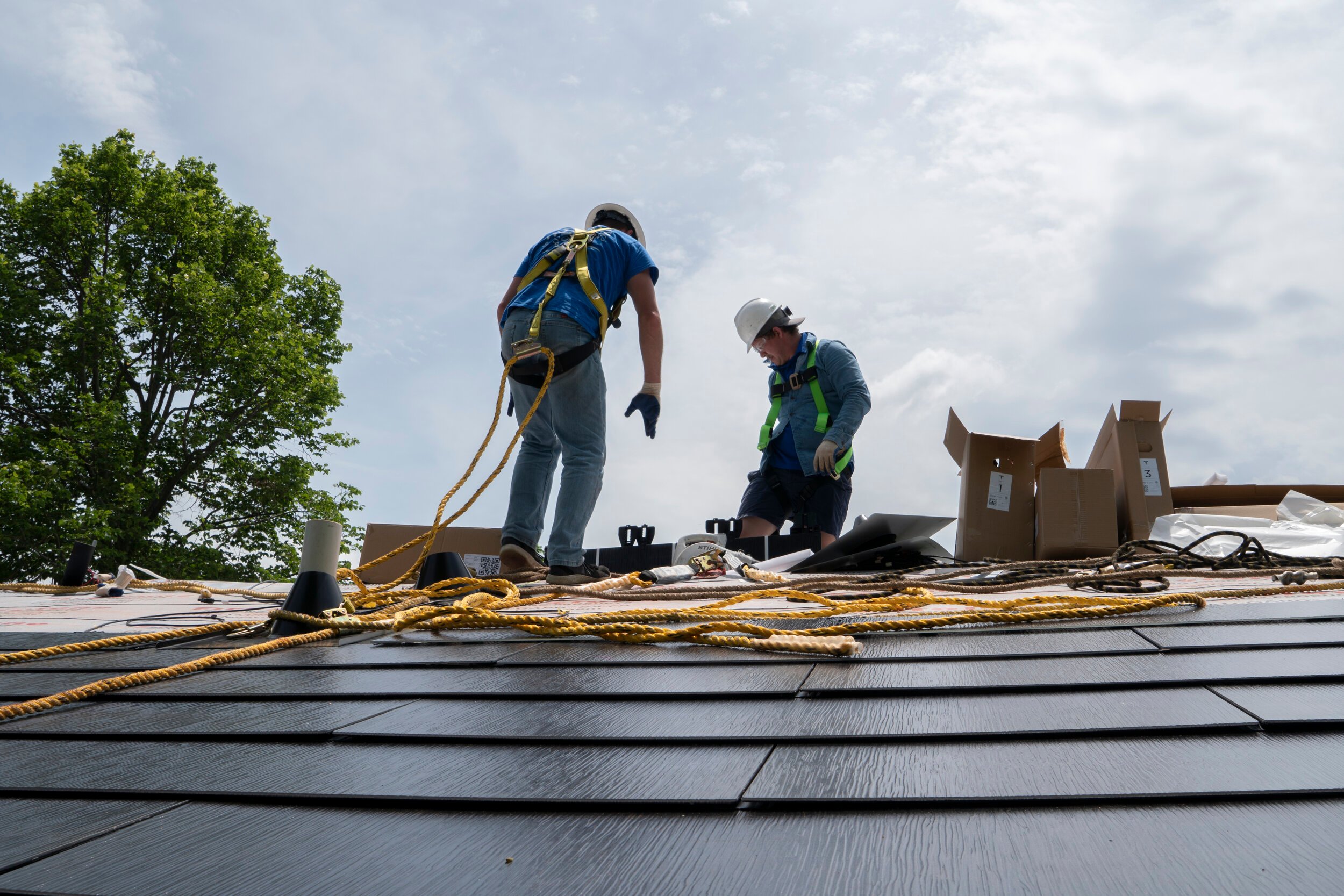
Yes. Sacramento is home to one of our three California installation teams, alongside Los Angeles and San Jose. Between them they cover the whole state. Our headquarters is in Houston, at 7055 Old Katy Rd, Suite 505, Houston, TX 77024. Call (855) 999-1850 for a free quote.
Ready to make your own power?
Get a free quote built around your roof and your last year of bills, or call and talk it through with our team.