
Philly roofs, a Philly crew. Solar panel installation in Philadelphia, from our installation team based in the city.
- Philadelphiabase of one of our three Pennsylvania installation teams
- 5,000+installations since 2017
- $500PECO’s solar rebate for homeowners, while funds last
What happens when Philadelphia’s power goes out?
Panels on their own shut off whenever PECO’s grid is down. With a battery, the circuits you pick keep running, and the panels top it up on sunny days. PECO’s storm record shows why that matters: Hurricane Sandy cut power to 54% of its customers in October 2012, and the last waited 9 days.
- Panels alone
- Off with the grid, and back on when it is.
- Panels and a battery
- The fridge, lights, Wi-Fi, chargers and a few outlets run for about 27 hours on one Powerwall 3, refilled by the panels each sunny day.
The outage record
March 2018Winter Storms Riley and Quinn
47%
794,969 customers affected, the last restored 8.3 days after the first outage.
February 2014Ice Storm Nika
42%
723,681 customers affected, the last restored 7.6 days after the first outage.
October 2012Hurricane Sandy
54%
845,703 customers affected, the last restored 9 days after the first outage.
Each bar is the share of all PECO customers, across Philadelphia and southeastern Pennsylvania, who lost power during the storm (customers affected, not out at once), as PECO reported them to the Pennsylvania Public Utility Commission. Figures from the Commission’s March 2019 report on Winter Storms Riley and Quinn, which compares Sandy and Nika, checked November 2026.
How does going solar work in Philadelphia?
Two sign-offs, and we handle both. PECO’s interconnection application goes in first, because L&I won’t take a solar permit without it. On a flat or low-slope roof, a home system up to 10 kW with no battery gets L&I’s EZ permit with no plans; anything else has its plans reviewed within 20 business days.
- Permit, HOA and utility. About 4 to 6 weeks.
- Installation. Usually 1 to 2 days, by our crew.
- Inspection and switch-on. About 2 to 3 weeks, then the utility gives permission to operate.
Who signs off in Philadelphia
- Permit
- The Department of Licenses and Inspections (L&I) issues an electrical permit for every system, online through eCLIPSE or in person, and a licensed electrical contractor does the work. The fee is $25 per $1,000 of electrical work, and the cost of the panels and inverter can be left out of that figure.
- EZ permit
- No plans and no building permit: the same day in person, or within 3 business days online. It covers rooftop systems up to 10 kW AC on one- and two-family homes, on a roof sloped no more than 2:12, with no battery, panels under 18 inches high and under 5 pounds per square foot, and racking rated for 115 mph winds.
- Plan review
- Roofs steeper than 2:12, batteries and systems over 10 kW also need a $200 building permit, with plans that L&I reviews within 20 business days.
- Inspections
- A licensed third-party electrical inspection agency, hired by the owner or on the owner’s behalf, inspects the work, not a city inspector. Once it passes, L&I issues a Certificate of Approval.
- Historic homes
- On the Philadelphia Register of Historic Places, the Historical Commission approves the work first: L&I refuses the permit without that approval, and the EZ permit doesn’t apply. The Commission charges nothing for its review.
- Utility hookup
- PECO, and its interconnection application goes in before the city permit. Inverter systems up to 10 kW with certified equipment get Pennsylvania’s simplest (Level 1) review. PECO grants permission to install, then puts the system in service, and it’s net metered at the full retail price.
City of Philadelphia Department of Licenses and Inspections: “Get a permit to install solar panels” and its EZ Permit Standard for solar PV systems (revised July 2026). Philadelphia Historical Commission. 52 Pa. Code § 75.34 and § 75.37 (interconnection). Checked November 2026.
What does solar cost in Philadelphia?
Find your monthly kWh on your electricity bill and read across: that’s the system a Philadelphia roof needs to cover 90 to 100% of your use, and its price before incentives. At the Pennsylvania average of 817 kWh a month, that’s about 7.0 kW, roughly $14,500 to $20,600.
Incentives: PECO pays homeowners $500 for a new system while funds last, and every 1,000 kWh it makes earns a solar credit (SREC) you can sell. Pennsylvania has no state solar tax credit, the city’s own rebate (set up for 2020 to 2024) isn’t offered now, and the 30% federal credit for homeowners ended with 2025.
Pennsylvania incentives in fullBy monthly use
817 kWhPennsylvania average
System7.0 kW
Panels16
Before incentives$14,500 to $20,600
1,500 kWh
System12.8 kW
Panels30
Before incentives$26,700 to $37,800
2,000 kWh
System17.1 kW
Panels39
Before incentives$35,500 to $50,400
2,500 kWh
System21.4 kW
Panels49
Before incentives$44,400 to $63,000
Work it out for your own bill
Add up the kWh on your last 12 bills, or multiply one month by 12.
- System in Philadelphia
- 7.0 kW16 panels
- At one IntegrateSun project’s price ($2.08/W)
- $14,500
- At Philadelphia’s average ($2.95/W)
- $20,600
- Before any incentives
- $14,500 to $20,600
Sizing: Philadelphia’s 4.81 peak sun hours a day (PVWatts) and 440-watt panels, to cover 90 to 100% of a year’s use. Prices before incentives: one IntegrateSun project (16.72 kW, cash price) and EnergySage’s Philadelphia average as of November 2026. Pennsylvania average use: U.S. Energy Information Administration, 2024. An estimate, not a quote: your roof and equipment set the real price.
How does PECO credit the solar you send back?
At the full retail price, kWh for kWh, on PECO’s standard supply. What your panels send back offsets power you buy later, any extra rolls forward from bill to bill, and whatever is left when the year closes on May 31 is paid out at PECO’s price to compare.
We look at your PECO bills and your last year of use when we design your system.
What solar is worth on a Pennsylvania billBuying from a competitive supplier? Your supplier’s contract sets the credit for the supply part of your bill. PECO credits only the distribution part, and those credits don’t carry into the next year.
PECO’s net metering, rule by rule
- Netting
- Each bill, PECO counts what your panels send back against what you buy, kWh for kWh. Home systems up to 50 kW qualify.
- Credit per kWh
- The full retail rate, generation, transmission and distribution together: the same price you pay PECO for power.
- Carryover
- Extra kWh roll forward to your later bills, through a net metering year that runs from June 1 to May 31.
- Year-end payout
- Credit still unused on May 31 is paid out at PECO’s price to compare, the supply part of the rate.
- Fixed charges
- No solar fee. PECO has to bill a net-metered home at the same rates and monthly charges as any other home on its standard supply.
- Meter
- If your meter can’t net meter, PECO replaces it at its own expense.
How the rules shape the design
Sized to your year’s use
Each kWh you send back covers one you’d otherwise buy at the full price later in the year, so every panel earns the retail rate.
Sized past it
The surplus left on May 31 is paid at the lower price to compare, so panels beyond a year’s use earn less each.
Pennsylvania’s net metering rules, 52 Pa. Code § 75.12 to § 75.14, which PECO’s tariff has to follow, checked November 2026. Terms are for homes on PECO’s standard supply.
How much do solar panels cost in Philadelphia?
Expect $14,500 to $20,600 before incentives at Pennsylvania’s average use of 817 kWh a month, which takes about 7.0 kW of panels under Philadelphia’s sun. At 1,500 kWh a month it’s about 12.8 kW and $26,700 to $37,800. The low figure is at one IntegrateSun project’s price, the high at Philadelphia’s average; your own quote depends on your roof and equipment. PECO pays its $500 rebate after the system is in service.
See prices by monthly useDo I need a permit for solar panels in Philadelphia?
Yes. L&I issues an electrical permit for every system. A rooftop system up to 10 kW on a one- or two-family home, on a roof sloped 2:12 or less and with no battery, gets an EZ permit with no plans: the same day in person, or within 3 business days online. Anything else also needs a building permit, with plans reviewed within 20 business days. We file it, after PECO’s interconnection application, which the city wants first.
Who signs off in PhiladelphiaCan I put solar panels on a flat roof in Philadelphia?
Yes, and a flat roof is the quickest to permit here. L&I’s EZ standard allows ballasted racking on flat roofs, held down by weight instead of bolts through the roof, and it covers roofs sloped up to 2:12. A system up to 10 kW on a one- or two-family home, with no battery, can qualify if the panels stand under 18 inches high, weigh under 5 pounds per square foot and sit on racking rated for 115 mph winds.
Can I put solar panels on a historic house in Philadelphia?
Yes, with the Historical Commission’s approval if your home is on the Philadelphia Register of Historic Places. L&I won’t accept the permit without it, and the EZ permit doesn’t apply, so the system needs plans. The review is free, and the Commission’s staff approve over 90% of building permit applications without sending them to a committee. We handle it with the permit.
Historic homes and other rulesDoes Philadelphia have a solar rebate?
Not from the city right now. Philadelphia’s solar rebate, $0.20 a watt for homes, was set up for 2020 to 2024 and isn’t among the Philadelphia Energy Authority’s programs today. PECO pays homeowners $500 for a system up to 50 kW while funds last, and you apply within 90 days of PECO putting it in service.
Pennsylvania incentives in fullHow long does it take to go solar in Philadelphia?
Around two months from start to finish, typically. PECO’s interconnection application and the L&I permit take about 4 to 6 weeks; our crew installs in 1 to 2 days; then the third-party inspection and PECO putting the system in service take about 2 to 3 weeks. A home on the historic register also needs the Historical Commission’s approval before L&I will take the permit.
Will solar panels keep my power on in a Philadelphia outage?
Only with a battery. Grid-tied panels shut down whenever PECO’s lines are dead, to protect the people repairing them. A battery keeps the circuits you pick running and refills from the panels on sunny days: one Powerwall 3 covers the fridge, lights, Wi-Fi, chargers and a few outlets for about 27 hours. Adding one here also means a building permit with plans, because L&I’s EZ permit excludes batteries. In October 2012, Hurricane Sandy cut power to 54% of PECO’s customers, and the last were restored 9 days after the first outage.
How long a battery lastsDoes IntegrateSun have a team in Philadelphia?
Yes. Our installation team is based in Philadelphia, and with our teams in Camp Hill and Pittsburgh it covers all of Pennsylvania. Our headquarters is in Houston. Call (855) 999-1850 for a free quote.
Where we install in Pennsylvania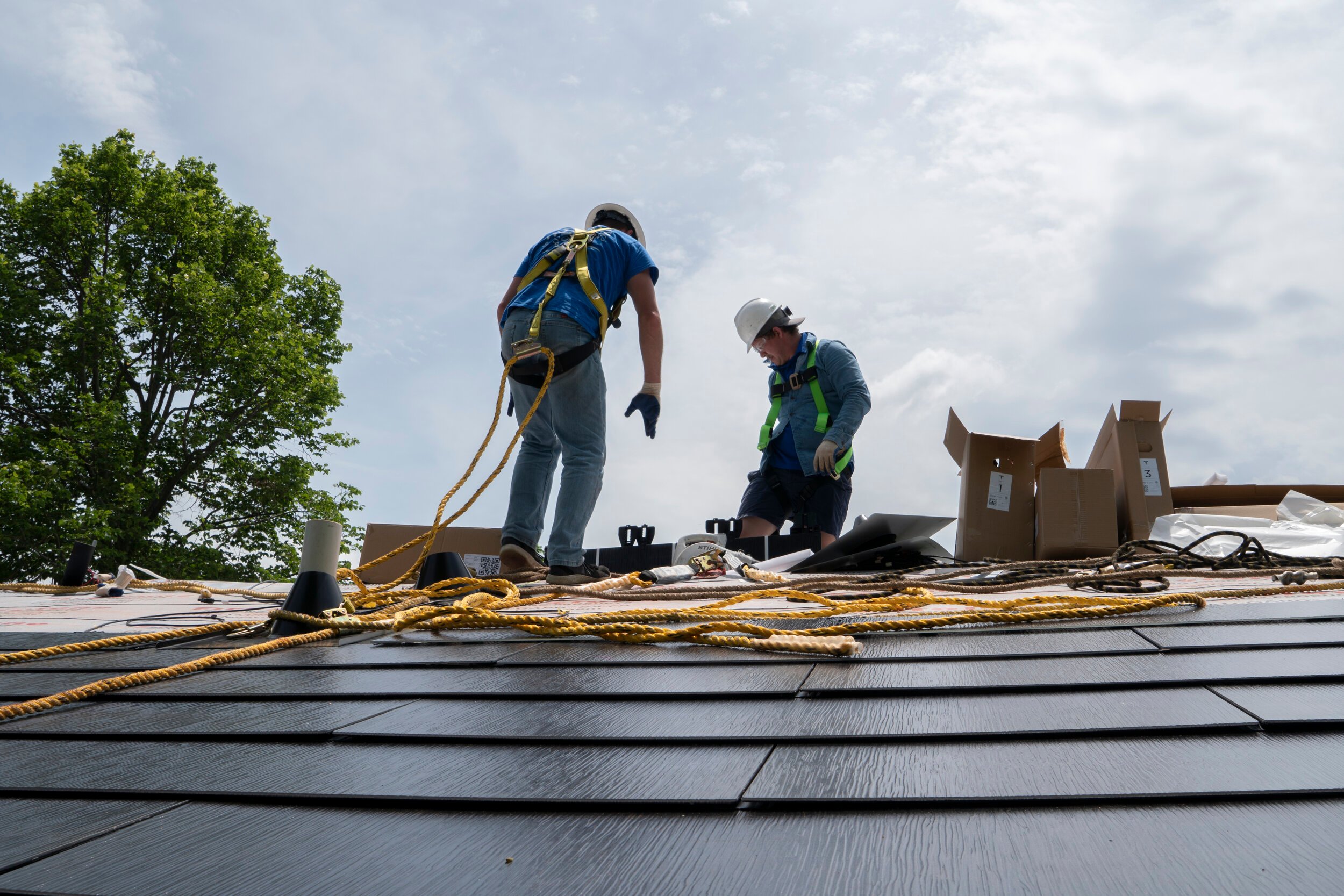
Ready to make your own power?
Get a free quote built around your roof and your last year of bills, or call and talk it through with our team.