
Bank July’s sun for a Pittsburgh January. Solar panel installation in Pittsburgh, by our installation team based here.
- Pittsburghhome base of one of our three Pennsylvania installation teams
- 1 business dayfor the city’s EZ permit on a flush roof-mounted system, in its pilot program
- 5,000+installations since 2017
How does going solar work in Pittsburgh?
Two sign-offs, and we handle both. The city’s Department of Permits, Licenses and Inspections (PLI) permits the system and inspects it, and a flush roof system on a one- or two-family home can qualify for a permit in one business day. Then Duquesne Light approves the hookup and gives permission to operate.
- Permit, HOA and utility. About 4 to 6 weeks.
- Installation. Usually 1 to 2 days, by our crew.
- Inspection and switch-on. About 2 to 3 weeks, then the utility gives permission to operate.
Who signs off in Pittsburgh
- EZ permit
- The city’s Department of Permits, Licenses and Inspections (PLI) issues an EZ electrical permit through OneStopPGH for a listed system mounted flat on the roof of an existing one- or two-family home or townhouse, if your electrical service can take it without an upgrade. It’s issued within one business day of the city verifying the application.
- Standard permit
- Ground mounts, canopies, ballasted racking, slate or clay-tile roofs, structural work, a service upgrade or a battery need a standard electrical permit and a Building and Development Review Application instead. PLI’s typical review time for those is 15 to 30 business days.
- Fees
- A base fee of $6 per $1,000 of construction value for a residential permit, at least $130 and at most $8,000, plus a few small per-permit fees (PLI’s 2026 schedule). An EZ permit adds no fee of its own.
- Historic districts
- Exterior work in a City-designated historic district needs the Historic Review Commission’s approval, a Certificate of Appropriateness, before the permit. Staff can approve certain kinds of projects themselves; the rest wait for the commission, which meets the first Wednesday of each month. Historic properties can’t use the EZ permit.
- Utility hookup
- Duquesne Light, which serves about 610,000 customers in parts of Allegheny and Beaver counties, including the city. Under state rules it has 10 business days to say whether your application is complete, then 15 more to check that a certified system of 10 kW or less can connect safely, or 20 to screen a larger one.
- Exports
- On Duquesne Light’s standard supply, net metered at the full retail rate, kWh for kWh, and carried forward to the end of May. The rules are below.
City of Pittsburgh Department of Permits, Licenses and Inspections: EZ Permits (Pilot), Electrical Permit and the 2026 fee schedule. Department of City Planning: Historic Review and its Certificate of Appropriateness process guide. Duquesne Light’s June 2026 readiness report to the Pennsylvania Public Utility Commission. 52 Pa. Code §§ 75.34, 75.37 and 75.38 (interconnection). Checked November 2026.
What does solar cost in Pittsburgh?
Find your monthly kWh on your electricity bill and read across: that’s the system a Pittsburgh roof needs to cover 90 to 100% of your use, and its price before incentives. At the Pennsylvania average of 817 kWh a month, that’s about 7.8 kW, roughly $16,200 to $20,200.
Incentives: Each 1,000 kWh your panels make earns a Pennsylvania solar credit (SREC) you can sell; they averaged $28.26 from June 2025 to May 2026. There’s no state tax credit, and the 30% federal credit for homeowners ended with 2025. PECO’s $500 rebate is for PECO customers only, so it doesn’t apply on Duquesne Light.
Pennsylvania incentives in fullBy monthly use
817 kWhPennsylvania average
System7.8 kW
Panels18
Before incentives$16,200 to $20,200
1,500 kWh
System14.3 kW
Panels33
Before incentives$29,700 to $37,100
2,000 kWh
System19.0 kW
Panels44
Before incentives$39,600 to $49,500
2,500 kWh
System23.8 kW
Panels55
Before incentives$49,500 to $61,800
Work it out for your own bill
Add up the kWh on your last 12 bills, or multiply one month by 12.
- System in Pittsburgh
- 7.8 kW18 panels
- At one IntegrateSun project’s price ($2.08/W)
- $16,200
- At Pittsburgh’s average ($2.60/W)
- $20,200
- Before any incentives
- $16,200 to $20,200
Sizing: Pittsburgh’s 4.32 peak sun hours a day (PVWatts) and 440-watt panels, to cover 90 to 100% of a year’s use. Prices before incentives: one IntegrateSun project (16.72 kW, cash price) and EnergySage’s Pittsburgh average as of November 2026. Pennsylvania average use: U.S. Energy Information Administration, 2024. An estimate, not a quote: your roof and equipment set the real price.
What does Duquesne Light pay for solar you send back?
The full retail rate, as kWh credits, if you’re on its standard supply. Pennsylvania’s rules have Duquesne Light credit what your panels send back kWh for kWh against the power you buy, with generation, transmission and distribution charges included, and carry any extra forward. Whatever is left on May 31 is paid at its price to compare.
About 108 MW of net-metered systems are already connected to Duquesne Light’s grid. We look at your bills and your supply plan when we design yours.
Read Pennsylvania’s net metering rule (Pennsylvania Code, opens in a new tab)Buying from a supplier? A competitive supplier’s contract sets the credit for the supply part of your bill. Duquesne Light credits only the distribution part, and those credits don’t carry into the next year.
Duquesne Light’s net metering, rule by rule
- Netting
- Each billing period, the kWh your panels send to the grid offset the kWh you buy from it, one for one.
- Credit per kWh
- The full retail rate: generation, transmission and distribution charges together, not a lower export rate. For scale, Duquesne Light homes on its standard supply paid an average 21.7¢ a kWh in 2024, all charges included.
- Carryover
- Extra kWh carry forward to later bills, so a summer surplus can cover power you use in winter.
- Year end
- The net metering year runs June 1 to May 31. Credits still unused at the end are paid at Duquesne Light’s price to compare, the supply part of the rate.
- System size
- Home systems up to 50 kW qualify.
How the rules shape the design
Sized to your year’s use
Summer surplus carries into winter at the full price, so a system that covers close to a year of your use gets full value from nearly every kWh.
Sized past it
Whatever is left on May 31 earns only the price to compare, so panels beyond a year’s use add less.
52 Pa. Code §§ 75.12 and 75.13 (net metering), which Duquesne Light follows as the default service provider; U.S. Energy Information Administration, 2024 residential sales by utility; Duquesne Light’s June 2026 readiness report to the Pennsylvania Public Utility Commission. Checked November 2026.
How much do solar panels cost in Pittsburgh?
Roughly $16,200 to $20,200 before incentives, for the 7.8 kW of panels a Pittsburgh home using the Pennsylvania average of 817 kWh a month needs. The range runs from one IntegrateSun project’s price per watt to EnergySage’s Pittsburgh average for November 2026. At 1,500 kWh a month, it’s about 14.3 kW and $29,700 to $37,100. Your roof, your equipment and any battery set the real price.
See prices by monthly useIs Pittsburgh sunny enough for solar panels?
Yes. A south-facing Pittsburgh roof averages 4.32 peak sun hours a day across the year, and each kW of panels makes about 1,192 kWh a year. Panels make the most in summer, and on Duquesne Light’s standard supply extra kWh carry forward at the full retail rate until May 31, so a summer’s surplus can cover winter bills. We size the system to a full year of your use.
Do I need a permit for solar panels in Pittsburgh?
Yes, from the city’s Department of Permits, Licenses and Inspections (PLI). A listed system mounted flat on the roof of an existing one- or two-family home or townhouse, with no service upgrade or battery, can get an EZ electrical permit within one business day of the city verifying the application. Slate or clay-tile roofs, structural work, ground mounts and homes in historic districts don’t qualify: they need a standard electrical permit and a Building and Development Review Application, typically 15 to 30 business days. We file it for you.
Who signs off in PittsburghHow long does it take to go solar in Pittsburgh?
Around two months, depending on the permit and Duquesne Light’s approvals. Permits, any HOA approval and Duquesne Light’s interconnection review run about 4 to 6 weeks; our crew installs in 1 to 2 days; then the city’s inspection and Duquesne Light’s permission to operate follow in about 2 to 3 weeks. In a City-designated historic district, the historic review comes before the permit, and the commission meets the first Wednesday of each month.
Can I put solar panels on a house in a Pittsburgh historic district?
In a City-designated historic district, only with the Historic Review Commission’s approval: exterior work there needs a Certificate of Appropriateness before the permit is issued. Staff can approve certain kinds of projects themselves; the rest go to the commission, which meets the first Wednesday of each month. Historic properties also can’t use the city’s one-day EZ permit.
Permits and historic reviewHow does Duquesne Light credit the solar I send back?
At the full retail rate, kWh for kWh, if you buy power on Duquesne Light’s standard supply. What your panels send back offsets what you buy at the full rate, with generation, transmission and distribution charges included, and extra kWh carry forward to later bills. Any left at the end of the year, on May 31, are paid at Duquesne Light’s price to compare. If you buy from a competitive supplier, its contract sets the credit for the supply part.
Duquesne Light’s rules, row by rowWill solar panels keep my power on in a Pittsburgh outage?
Only with a battery. Panels tied to the grid shut down in an outage so they can’t send power into lines being repaired. A battery keeps the circuits you pick running and refills from the panels when the sun is out: one Powerwall 3 covers the fridge, lights, Wi-Fi, chargers and a few outlets for about 27 hours. In the storm of April 29, 2025, the worst in Duquesne Light’s history by its own account, about 43% of its customers lost power, 231,001 of them at the peak, and the last were restored on May 9, 10 days later.
How long a battery lastsDoes IntegrateSun have a team in Pittsburgh?
Yes. Our installation team is based in Pittsburgh, and with our teams in Philadelphia and Camp Hill it covers all of Pennsylvania. Our headquarters is in Houston. Call (855) 999-1850 for a free quote.
Where we install in Pennsylvania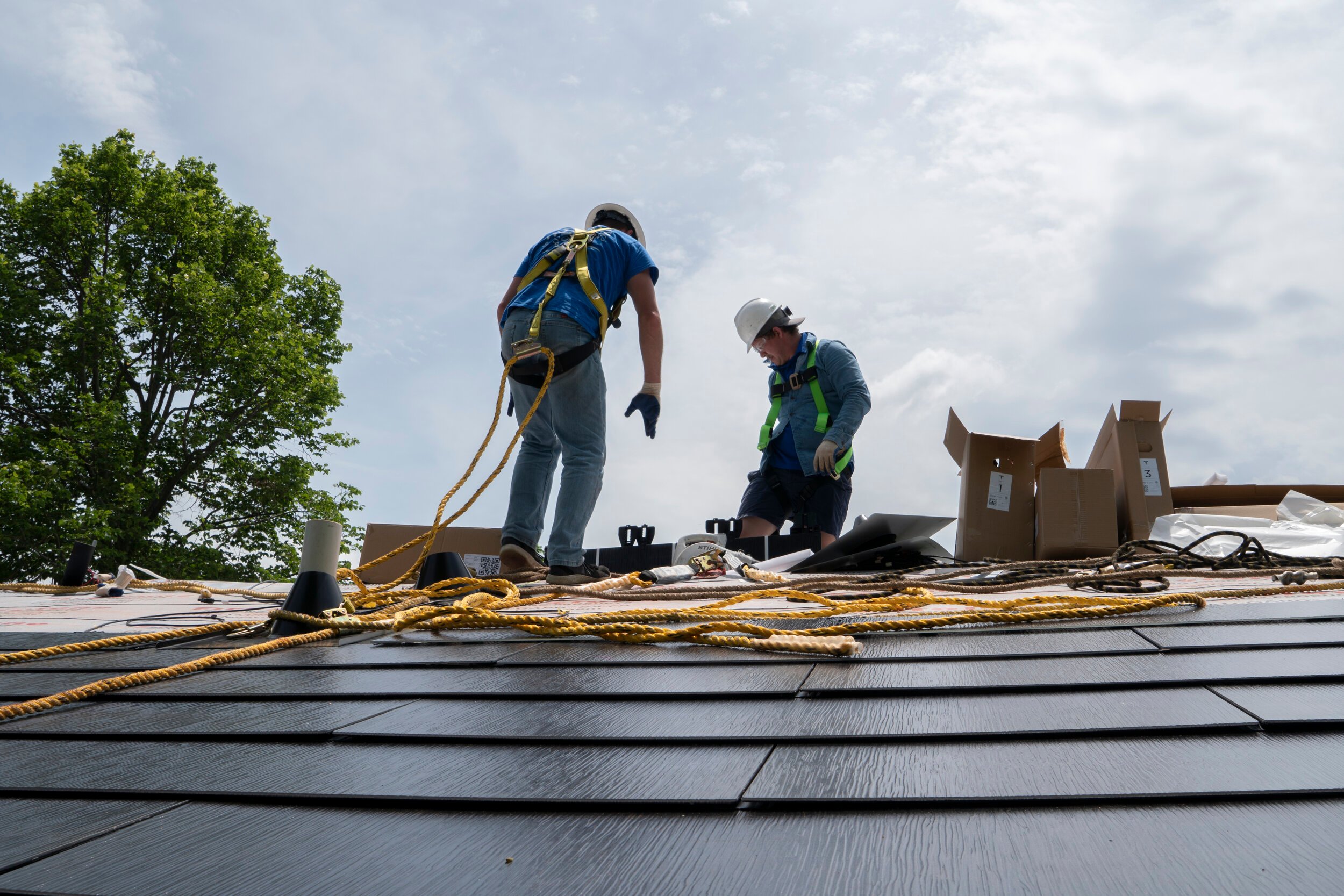
Ready to make your own power?
Get a free quote built around your roof and your last year of bills, or call and talk it through with our team.