
Orlando sun, best spent at home. Solar panel installation in Orlando, by the Florida crew we employ and base here.
- Orlandohome base of our Florida installation team
- FL EC13011261Florida certified electrical contractor license, held by IntegrateSun LLC’s qualifying agentCheck it with the DBPR (opens in a new tab)
- 5,000+installations since 2017
What happens to solar when Orlando’s power goes out?
Grid-tied panels stop whenever OUC’s lines go down, so they can’t back-feed the lines crews are repairing. Your power stays on only with a home battery, wired to the circuits you pick and recharged by the panels each sunny day. Orlando has needed it: Hurricane Irma cut power to 60% of OUC’s customers in 2017, and Hurricane Milton to 32% in 2024.
- Panels alone
- Off with the grid, and back on when it is.
- Panels and a battery
- The fridge, lights, Wi-Fi, chargers and a few outlets run for about 27 hours on one Powerwall 3, refilled by the panels each sunny day.
The outage record
October 2024Hurricane Milton
32%
89,070 customers out the morning after landfall, nearly all restored within 3 days.
September 2022Hurricane Ian
36%
97,560 customers out at the peak, restored 4 days later.
September 2017Hurricane Irma
60%
145,000 customers out, 99.5% restored 6 days after impact.
Each bar is the share of OUC’s customers in Orlando and St. Cloud without power at the count OUC reported: Ian’s peak, the morning after Milton’s landfall, and Irma’s total. Figures from OUC’s own storm advisories, its blog and its Financial and Statistical Report, checked November 2026.
How does going solar work in Orlando?
The city and OUC each sign off, and we handle both. Permitting Services reviews the plans, issues an electrical permit and inspects the work twice. Then OUC takes the interconnection application and switches your meter over to solar.
- Permit, HOA and utility. About 4 to 6 weeks.
- Installation. Usually 1 to 2 days, by our crew.
- Inspection and switch-on. About 2 to 3 weeks, then the utility gives permission to operate.
Orlando’s permit and hookup, step by step
- Permit
- The city’s Permitting Services Division issues an electrical permit, the only permit a home needs for solar panels. The owner signs it before a notary, or a signed contract stands in, and any job over $5,000 needs a recorded notice of commencement before the permit is issued.
- Wind and roof
- The plans show the roof, the panels’ Florida Solar Energy Center certification and how they’re attached, with product approvals for the minimum wind speed. The racking and attachments are designed for Orlando’s wind zone and sealed by a design professional.
- Review and inspection
- Florida law gives the city 30 business days from a complete application to approve the plans or send comments on most homes, or 5 when the work costs under $15,000. Plans have gone in online since 2017. The city then inspects twice, rough and final.
- Historic districts
- In a historic district or on a landmark property, a Certificate of Appropriateness comes first. Solar is a minor review, with no fee.
- Utility hookup
- OUC. Once the final inspection passes, the installer files OUC’s online interconnection application with the passed inspection and a wiring diagram, and OUC reprograms your meter for solar. The system can’t run with the grid until OUC approves.
- Exports
- Credited by OUC at 5.5¢ a kWh, about half its retail price. The rules are below.
HOA rules: Florida Statutes §163.04
No HOA rule or deed restriction can ban solar panels in Florida. The association may only choose where on the roof they go, facing south or within 45° east or west of due south, and only if that doesn’t impair how well they work.
City of Orlando Permitting Services: Solar Plan Review Checklist, Building Permit Guidelines (Florida Statutes §553.792) and the Certificate of Appropriateness for minor review. OUC’s rooftop solar page and interconnection requirements. Florida Statutes §163.04. Checked November 2026.
What does solar cost in Orlando?
Find your monthly kWh on your electricity bill and read across: that’s the system a Orlando roof needs to cover 90 to 100% of your use, and its price before incentives. At the Florida average of 1,104 kWh a month, that’s about 8.1 kW, roughly $16,600 to $16,800.
Incentives: Florida has no state solar tax credit, and the 30% federal credit for homeowners ended with 2025. Florida does exempt solar equipment from sales tax and keeps the system’s value out of your property tax assessment. OUC adds a battery rebate: $150 per kWh of storage, up to $2,000, as a bill credit.
Florida incentives in fullBy monthly use
1,104 kWhFlorida average
System8.1 kW
Panels19
Before incentives$16,600 to $16,800
1,500 kWh
System10.9 kW
Panels25
Before incentives$22,600 to $22,800
2,000 kWh
System14.6 kW
Panels34
Before incentives$30,100 to $30,400
2,500 kWh
System18.2 kW
Panels42
Before incentives$37,600 to $38,000
Work it out for your own bill
Add up the kWh on your last 12 bills, or multiply one month by 12.
- System in Orlando
- 8.1 kW19 panels
- At Orlando’s average ($2.06/W)
- $16,600
- At one IntegrateSun project’s price ($2.08/W)
- $16,800
- Before any incentives
- $16,600 to $16,800
Sizing: Orlando’s 5.63 peak sun hours a day (PVWatts) and 440-watt panels, to cover 90 to 100% of a year’s use. Prices before incentives: one IntegrateSun project (16.72 kW, cash price) and EnergySage’s Orlando average as of November 2026. Florida average use: U.S. Energy Information Administration, 2024. An estimate, not a quote: your roof and equipment set the real price.
What does OUC credit for solar you send back?
5.5¢ a kWh for systems applied for since July 1, 2025, through June 30, 2030. That’s about half the 10.7¢ OUC charges for each of your first 1,000 kWh a month, so in Orlando solar is worth most when your home uses it as it’s made. Since November 1, 2026, the credit goes straight onto that month’s bill.
We work from your OUC rate and a year of your bills when we size your system.
Read OUC’s rooftop solar rules (OUC’s site, opens in a new tab)On Duke Energy instead? Parts of greater Orlando are on Duke Energy Florida, under the state’s net metering rule: each kWh you send back offsets one you’d buy. How Duke credits solar.
OUC’s TruNet Solar rules, one by one
- How it’s billed
- OUC bills each kWh it delivers at your normal rate and credits each kWh your panels send back. Solar your home uses as it’s made never reaches OUC’s meter, so it saves the full price: 10.7¢ a kWh for your first 1,000 kWh a month, 13.2¢ above that.
- Credit per kWh
- 5.5¢ for systems applied for since July 1, 2025: OUC’s Community Solar Energy Rate, its fuel charge plus 0.7¢. It moves when the fuel charge does.
- From July 2030
- The rate above runs until June 30, 2030. After that, exports earn the fuel charge alone, 4.8¢ a kWh today.
- Carryover
- Since November 1, 2026, credits land on the same month’s bill and can pay its electric and water charges. Whatever is left carries forward in dollars. There’s no more solar bank or year-end true-up.
- Fixed charges
- Every bill carries the $18.50 customer charge and a DemandLevel charge of $5 to $15, set by your home’s highest 15-minute demand that month. Together they’re OUC’s minimum bill.
- Time of use
- None for homes: OUC closed its residential time-of-use pilot to new customers in 2022, so a kWh costs the same at noon as at 7 PM.
How the credit shapes the design
Sized to what you use
Most of the solar goes to work in the house at 10.7¢ or more a kWh, and only the surplus earns 5.5¢. OUC also asks that a system not exceed what the home needs.
Paired with a battery
Midday surplus charges the battery for the evening, where it saves 10.7¢ instead of earning 5.5¢, and OUC’s rebate pays $150 per kWh of storage, up to $2,000.
OUC’s TruNet Solar tariff (Sheet No. 3.500), its Community Solar Farm Rider (Sheet No. 5.925), its residential rates effective November 1, 2026 and its rooftop solar page, checked November 2026. OUC’s rates are subject to change.
How much do solar panels cost in Orlando?
Roughly $16,600 to $16,800 before incentives at the Florida average of 1,104 kWh a month, which takes about 8.1 kW of panels under Orlando’s sun. At 2,000 kWh a month, plan on about 14.6 kW and $30,100 to $30,400. Your roof, your equipment and any battery set the real price.
See prices by monthly useDo I need a permit for solar panels in Orlando?
Yes. Inside city limits, the City of Orlando’s Permitting Services Division issues an electrical permit, and Florida law gives it 30 business days from a complete application to approve the plans or comment on most homes. The plans must show wind-rated panel attachments, and a home in a historic district needs a Certificate of Appropriateness first. Outside city limits, your county or town issues it. We file it for you.
Orlando’s permit, step by stepHow long does it take to go solar in Orlando?
About two months from signing. The city permit and any HOA approval take about 4 to 6 weeks, installation takes 1 to 2 days with our crew, and the city’s final inspection and OUC’s interconnection approval take about 2 to 3 weeks more. OUC takes the application once the final inspection passes.
Does OUC charge a fee to connect solar panels?
Not for a system rated 10 kW or less, which OUC figures as the panels’ DC rating times 0.85, so up to about 11.8 kW of panels. Above that, up to 100 kW, the application fee is $340, and OUC requires $1 million of general liability insurance and a lockable disconnect switch beside the meter.
How the OUC hookup worksDoes OUC give a rebate for home batteries?
Yes. OUC pays $150 per kWh of battery capacity, up to $2,000, as a credit on your OUC bill: a 10 kWh battery earns $1,500, and a 13.5 kWh Powerwall 3 earns $2,000. The battery has to pair with OUC-connected solar of 20 kW or less, have a disconnect and an automatic transfer switch, support utility dispatch control and carry a warranty of 10 years or more. Apply within 6 months of buying it; leased batteries don’t qualify. If your panels still earn OUC’s full retail credit, taking the rebate gives that credit up.
Read about home batteriesCan solar panels stand up to an Orlando hurricane?
They’re designed for Orlando’s wind zone, and the city checks before it issues the permit: the plans must show panel attachments with product approvals for the minimum wind speed, and the racking design must be sealed by a design professional. Our crews use IronRidge racking. Wind-rated mounts won’t keep your lights on, though: the panels stop when OUC’s grid does, and it takes a battery to keep your essentials running.
OUC’s hurricane recordWill solar panels keep my power on in an Orlando outage?
Only with a battery. Panels by themselves shut off when OUC’s grid fails, to protect the crews working to restore it. Wired to the circuits you pick, a Powerwall 3 keeps a fridge, lights, Wi-Fi, chargers and a few outlets going for about 27 hours, and the panels recharge it each sunny day. The morning after Hurricane Milton’s landfall, 89,070 OUC customers had no power, and nearly all were back within 3 days.
How long a battery lastsDoes IntegrateSun have a team in Orlando?
Yes. Our Florida installation team is based in Orlando and covers the whole state. Our headquarters is in Houston. Call (855) 999-1850 for a free quote.
Where we install in Florida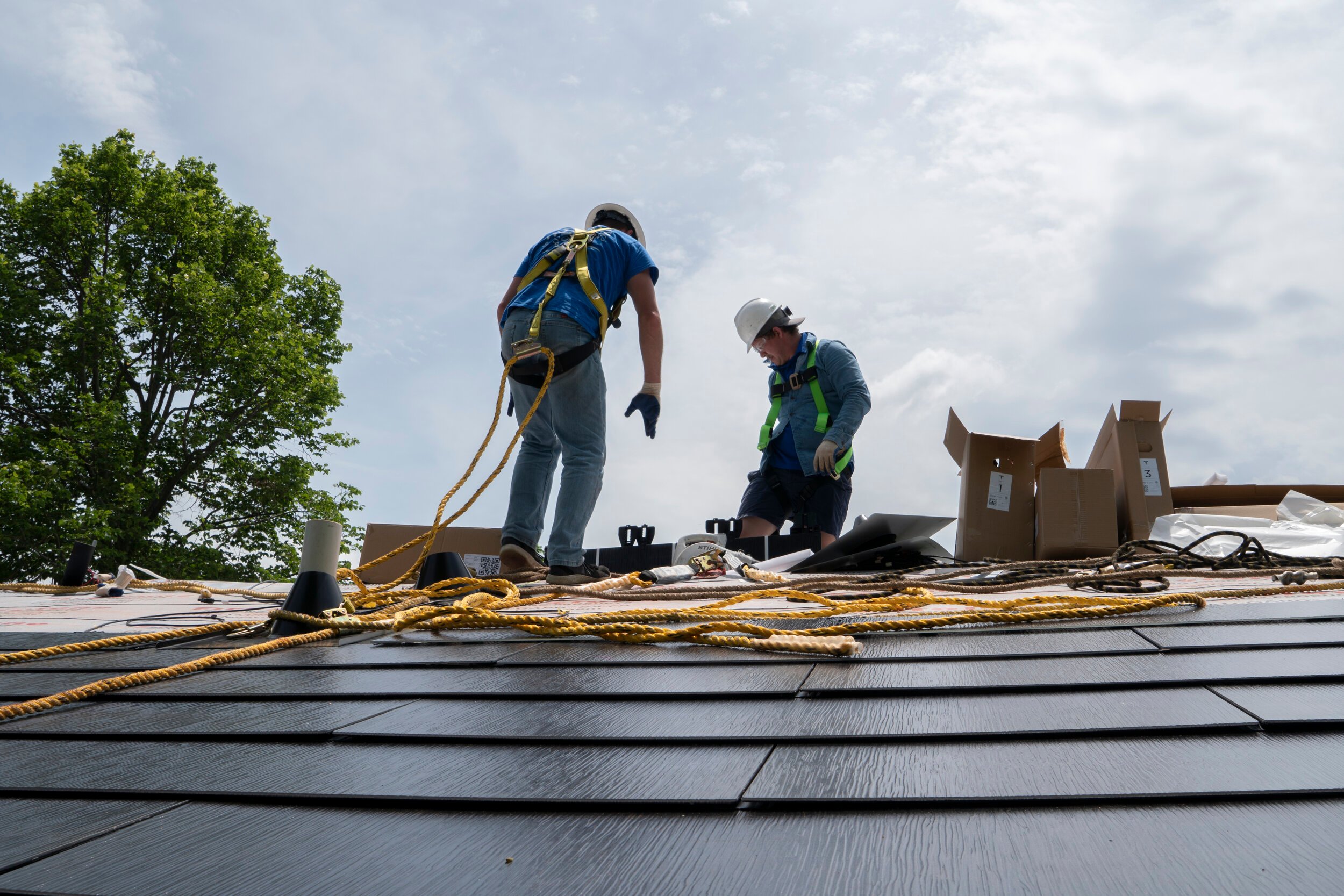
Ready to make your own power?
Get a free quote built around your roof and your last year of bills, or call and talk it through with our team.