
Southern Maryland roofs, a crew based here. Solar panel installation in Mechanicsville, from one of our two Maryland installation teams.
- Mechanicsvillebase of one of our two Maryland installation teams
- Same business daySt. Mary’s County’s aim for a complete SolarAPP+ permit filed by noon
- 5,000+installations since 2017
What happens when Mechanicsville’s power goes out?
When SMECO’s lines go down, grid-tied panels shut off with them, so they can’t feed power onto wires crews are repairing. A home battery keeps the circuits you pick running and recharges from the panels on sunny days. Hurricane Irene left 72% of SMECO’s customers without power in August 2011, and restoring them all took up to 7 days.
- Panels alone
- Off with the grid, and back on when it is.
- Panels and a battery
- The fridge, lights, Wi-Fi, chargers and a few outlets run for about 27 hours on one Powerwall 3, refilled by the panels each sunny day.
The outage record
August 2020Tropical Storm Isaias
24%
More than 40,000 homes and businesses lost power, all restored the next day.
August 2011Hurricane Irene
72%
About 108,000 customers out, all restored within 7 days.
Each bar is the share of SMECO’s customers without power, against the meters it served at the end of the year before; for Isaias, the homes and businesses that lost power. Figures from SMECO’s own annual reports for 2011, 2019 and 2020, checked November 2026.
How does going solar work in Mechanicsville?
The county permits it and SMECO connects it, and we file with both. St. Mary’s County issues the permit, through SolarAPP+ for a standard rooftop system. SMECO approves the design before we build, then gives permission to operate once the county’s inspection passes.
- Permit, HOA and utility. About 4 to 6 weeks.
- Installation. Usually 1 to 2 days, by our crew.
- Inspection and switch-on. About 2 to 3 weeks, then the utility gives permission to operate.
Who signs off in Mechanicsville
- Permit
- St. Mary’s County’s Department of Land Use and Growth Management (LUGM). Mechanicsville is unincorporated, so there’s no town permit.
- SolarAPP+
- Since April 1, 2026, a home rooftop system checked by SolarAPP+, the automated permit tool Maryland’s Brighter Tomorrow Act has counties adopt, gets a county SOLAPP permit online. The county aims to issue it the same business day when the complete package is in by noon. Fees are paid when you apply.
- Inspections
- Done by inspectors on the county’s approved list, with the electrical inspection by a state-certified third-party electrical inspector. SMECO needs the passed county inspection before the system can run.
- Utility hookup
- SMECO. We apply before work starts: no application fee for systems up to 20 kW, plus Maryland’s interconnection cost-sharing fee of $1.87 per kW of inverter. Its engineering review can take up to 20 business days, and building waits for its approval.
- Switch-on
- After the county inspection, SMECO reviews the paperwork and may inspect the site, which typically takes about a week, then emails permission to operate. A system run before that earns nothing for what it sends back.
- Exports
- Net metered by SMECO, kWh for kWh, with any unused surplus credited on your April bill. The rules are below.
HOA rules: Maryland’s solar access law
An HOA can’t put unreasonable limits on solar panels on a roof you own. Under Real Property § 2-119, a rule is unreasonable if it adds at least 5% to the installation cost or cuts the system’s output by at least 10%, documented by a qualified independent solar designer. Associations can still restrict common areas, and the law doesn’t cover homes listed in, or eligible for, the Maryland Register of Historic Properties.
St. Mary’s County Department of Land Use and Growth Management: LUGM Notice 26-0004 (SolarAPP+, March 2026) and the county building code (Ordinance 2024-11). SMECO’s Solar Interconnection Guide and net metering rider. Maryland Real Property Article § 2-119. Checked November 2026.
What does solar cost in Mechanicsville?
Find your monthly kWh on your electricity bill and read across: that’s the system a Mechanicsville roof needs to cover 90 to 100% of your use, and its price before incentives. At the Maryland average of 929 kWh a month, that’s about 7.8 kW, roughly $16,300 to $19,600.
Incentives: The 30% federal credit for homeowners ended with 2025. In Maryland, every 1,000 kWh your panels make earns an SREC to sell, and there’s no sales tax on the equipment or property tax on the system. Income-qualified households can get up to $7,500 back, and a battery can earn back 30% of its cost, up to $5,000.
Maryland incentives in fullBy monthly use
929 kWhMaryland average
System7.8 kW
Panels18
Before incentives$16,300 to $19,600
1,500 kWh
System12.6 kW
Panels29
Before incentives$26,300 to $31,600
2,000 kWh
System16.8 kW
Panels39
Before incentives$35,000 to $42,100
2,500 kWh
System21.1 kW
Panels48
Before incentives$43,800 to $52,600
Work it out for your own bill
Add up the kWh on your last 12 bills, or multiply one month by 12.
- System in Mechanicsville
- 7.8 kW18 panels
- At one IntegrateSun project’s price ($2.08/W)
- $16,300
- At Mechanicsville’s average ($2.50/W)
- $19,600
- Before any incentives
- $16,300 to $19,600
Sizing: Mechanicsville’s 4.88 peak sun hours a day (PVWatts for Baltimore, the nearest fetched Maryland site) and 440-watt panels, to cover 90 to 100% of a year’s use. Prices before incentives: one IntegrateSun project (16.72 kW, cash price) and EnergySage’s Mechanicsville average as of November 2026. Maryland average use: U.S. Energy Information Administration, 2024. An estimate, not a quote: your roof and equipment set the real price.
What does SMECO pay for solar you send back?
A full kWh of credit for each kWh, then a dollar credit for what’s left each April. SMECO nets what your panels send back against what you buy each month, at the rates you pay now. Surplus carries forward as kWh, and SMECO credits the value of whatever is left on your April bill.
We look at your SMECO bills and your last year of use when we design your system.
Read SMECO’s net metering rider (SMECO’s site, PDF, opens in a new tab)The 2027 deadline. Maryland closes net metering to new systems on July 1, 2027, or sooner if net-metered capacity statewide reaches 3,000 MW. Systems on it by then keep it, and the law intends what replaces it to pay less.
SMECO’s net metering, rule by rule
- Netting
- One two-way meter, swapped in at no charge, records what you buy and what you send back. Each month you’re billed for the difference, on the same rate schedule as before.
- Credit per kWh
- Each kWh you send back offsets one you’d buy, supply and delivery alike. On SMECO’s standard residential rate from August 2026, that’s 12.48¢ (summer) or 13.19¢ (winter) for supply plus 5.4¢ for delivery, before the monthly power cost adjustment and other riders.
- Carryover
- A month’s surplus rolls forward as kWh, for up to 12 months ending with the billing cycle before the end of April. As a co-op member, you can’t bank it indefinitely the way BGE and Pepco customers can.
- April credit
- What’s left is valued at SMECO’s supply rate averaged over the year, or at your supplier’s rate if you buy power from one, and credited on your April bill. In April 2026 the average credit was $58.79 for 4,131 residential customers.
- Monthly charges
- Every bill keeps the $9.75 facilities charge and the universal service charge, even in months the panels cover everything.
- Time of use
- On SMECO’s time-of-use plan, each kWh you send back offsets on-peak use first: 25.8¢ a kWh for supply in summer (2 to 7 PM on weekdays) and 23.6¢ in winter (6 to 9 AM and 5 to 8 PM). It’s open to homes on SMECO’s standard offer only.
How the rules shape the design
Sized to your year’s use
Each kWh you send back is worth a full kWh on your bill, so panels that cover close to a year’s use get the most from net metering.
Sized past it
Surplus left in April is credited at the supply rate alone, without the delivery part, so extra panels earn less. SMECO also caps a system at 200% of your last 12 months’ use.
SMECO’s Rider NM (net metering), its Schedules R and R-TOU (effective August 2026), its Solar Interconnection Guide and solar FAQs; Maryland Public Utilities Article § 7-306 as amended in 2026. Checked November 2026. SMECO’s power cost adjustment moves the supply rate each month.
What Mechanicsville homeowners ask about solar.
Not answered here? Ask us directly.
Call (855) 999-1850How much do solar panels cost in Mechanicsville?
About $16,300 to $19,600 before incentives for a home using the Maryland average of 929 kWh a month, which needs about 7.8 kW of panels. A home using 1,500 kWh a month needs about 12.6 kW: $26,300 to $31,600. Your roof, your equipment and any battery set the real price.
See prices by monthly useDo I need a permit for solar panels in Mechanicsville?
Yes, from St. Mary’s County. Mechanicsville is unincorporated, so the county’s Department of Land Use and Growth Management issues it. Since April 1, 2026, a standard rooftop system can go through SolarAPP+, and the county aims to issue the permit the same business day when the complete package is in by noon. We file it, and SMECO needs the passed county inspection before the system can run.
Who signs off in MechanicsvilleHow long does it take to go solar in Mechanicsville?
Usually about two months from signing. The county permit, any HOA approval and SMECO’s review take about 4 to 6 weeks, and SMECO’s engineering review alone can take up to 20 business days. Installation takes 1 to 2 days with our crew, and the county inspection and SMECO’s permission to operate take about 2 to 3 weeks more.
How does SMECO pay for the solar I send back?
Through net metering. Each kWh your panels send back offsets a kWh you’d otherwise buy, at your full per-kWh price, and a month’s surplus carries forward as kWh. Whatever is left by April is credited on your April bill at SMECO’s supply rate. In April 2026 the average credit was $58.79 for 4,131 SMECO residential customers.
SMECO’s rules, row by rowDoes SMECO offer a solar rebate?
Not for solar panels: SMECO’s own rebates are for energy efficiency, such as appliances and heating and cooling equipment, and its solar incentives page lists none of its own. Maryland’s programs still apply on SMECO’s lines: SRECs for every 1,000 kWh your panels make, up to $7,500 from the Maryland Solar Access Program for income-qualified households, and up to $5,000 toward a battery.
Maryland incentives in fullWill solar panels keep my power on in a SMECO outage?
Not panels alone. When SMECO’s lines go down, grid-tied panels shut off too, so they can’t feed power onto wires crews are repairing. Add a battery and the circuits you pick keep running, topped up by the panels on sunny days: a single Powerwall 3 can carry the fridge, lights, Wi-Fi, chargers and a few outlets for about 27 hours. Hurricane Irene left about 108,000 SMECO customers without power in August 2011, and restoring them all took up to 7 days.
How long a battery lastsCan my HOA stop me from going solar in Mechanicsville?
Not with unreasonable rules. Maryland law bars HOA, deed and condominium rules that limit solar panels on a roof you own if they would add at least 5% to the installation cost or cut the system’s output by at least 10%. An association can still restrict common areas, and homes listed in, or eligible for, the Maryland Register of Historic Properties aren’t covered. We handle the HOA approval for you.
Does IntegrateSun have a team in Mechanicsville?
Yes. One of our two Maryland installation teams is based in Mechanicsville, and with our team in Rockville it covers the whole state. Our headquarters is in Houston. Call (855) 999-1850 for a free quote.
Where we install in Maryland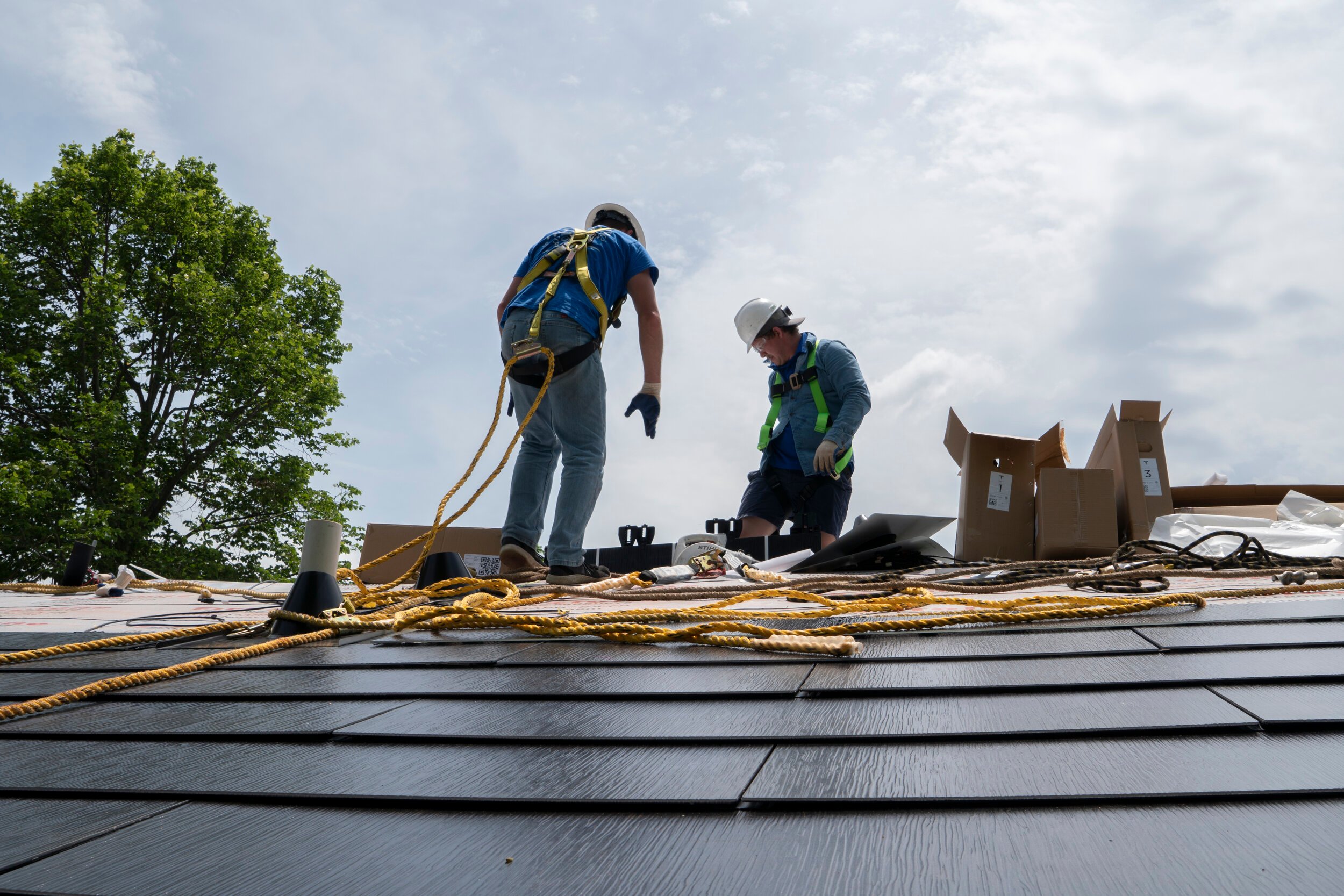
Ready to make your own power?
Get a free quote built around your roof and your last year of bills, or call and talk it through with our team.