
Closer to the sun by a mile. Solar panel installation in Denver, by installers we employ, working out of the city.
- 5.66 peak sun hoursa day in Denver: each kW of panels makes about 1,595 kWh a year
- Our own Colorado crewbased in Denver and Boulder
- SolarAPP+ quick permitsonline approval for eligible Denver systems under 10 kW
How does going solar work in Denver?
About two months from signing. We file the electrical permit with the city’s Community Planning and Development department and the connection application with Xcel Energy, whose engineers review the design before installation. Once the panels are up, the city inspects the system, then Xcel sets a meter that reads both ways; the technician’s door hanger is your permission to operate.
- Permit, HOA and utility. About 4 to 6 weeks.
- Installation. Usually 1 to 2 days, by our crew.
- Inspection and switch-on. About 2 to 3 weeks, then the utility gives permission to operate.
In Denver
- Permit
- An electrical permit from the City and County of Denver’s Community Planning and Development department, for every system; a ground mount needs a zoning permit too. Plans include a one-line diagram, calculations and equipment sheets; from 10 kW up, a Colorado-licensed professional engineer stamps the diagram and calculations. The fee for the solar work is a flat $50.
- Quick permit
- On a house or duplex with service of 400 amps or less, a system under 10 kW DC can get an Electrical Quick Permit through SolarAPP+, which checks the design against code online. Quick permits skip the city’s plan review. A battery or main panel upgrade for the solar can go on it; a service upgrade or EV charger needs its own permit.
- Fire access
- At least two 36-inch paths from the lowest edge of the roof to the ridge, on separate slopes and one on the street or driveway side, and a clear strip of 18 inches each side of the ridge, or 36 once panels cover more than a third of the roof. No panels below an emergency escape window. Detached garages, carports and flat roofs are exempt.
- Historic homes
- In a historic district or on a designated landmark, Landmark Preservation must first issue a certificate of appropriateness, confirming the design suits the property. The city advises getting it before applying for permits.
- Connection
- Xcel Energy connects the system. Its engineers review the design; after the city’s final electrical inspection, a technician installs or checks a meter that reads power both ways, and the door hanger left behind is your permission to operate.
- Exports
- Credited by Xcel Energy at its retail price for the hour they go out, and carried into later bills.
Colorado HOA rules
Colorado voids HOA covenants and deed restrictions that effectively ban or restrict solar panels. An HOA can still set reasonable rules on size, placement and appearance, as long as they don’t add more than 10% to the cost or take more than 10% off the output. It has 60 days to decide: an application that isn’t denied or returned for changes by then counts as approved, and a denial must give its reasons. The law gives no right to use the community’s common elements, such as a shared roof. We prepare the HOA application for you.
City and County of Denver, Community Planning and Development: Solar Permits for Photovoltaic and Hot Water Panels, Quick Permits, and Building and Land Development Fees. SolarAPP+’s list of Colorado jurisdictions. Xcel Energy’s Colorado interconnection guide and the Territory Served sheet of its Colorado tariff. Colorado Revised Statutes 38-30-168. Checked 19 November 2026.
What does solar cost in Denver?
Find your monthly kWh on your electricity bill and read across: that’s the system a Denver roof needs to cover 90 to 100% of your use, and its price before incentives. At the Colorado average of 674 kWh a month, that’s about 4.9 kW, roughly $10,200 to $13,300.
Incentives: No Colorado tax credit for solar, and the 30% federal credit for homeowners ended for systems installed after 2025. The equipment is exempt from Colorado’s state sales tax and the system from property tax. Xcel Energy’s solar rebate is only for income-qualified homes and those in disproportionately impacted communities; its battery program pays $250 per kW of a Tesla or Enphase battery, up to $5,000. The City of Denver lists no solar rebate of its own.
All Colorado incentivesBy monthly use
674 kWhColorado average
System4.9 kW
Panels12
Before incentives$10,200 to $13,300
1,500 kWh
System10.9 kW
Panels25
Before incentives$22,700 to $29,500
2,000 kWh
System14.5 kW
Panels34
Before incentives$30,200 to $39,400
2,500 kWh
System18.2 kW
Panels42
Before incentives$37,800 to $49,200
Work it out for your own bill
Add up the kWh on your last 12 bills, or multiply one month by 12.
- System in Denver
- 4.9 kW12 panels
- At one IntegrateSun project’s price ($2.08/W)
- $10,200
- At Denver’s average ($2.71/W)
- $13,300
- Before any incentives
- $10,200 to $13,300
Sizing: Denver’s 5.66 peak sun hours a day (PVWatts) and 440-watt panels, to cover 90 to 100% of a year’s use. Prices before incentives: one IntegrateSun project (16.72 kW, cash price) and EnergySage’s Denver average as of November 2026. Colorado average use: U.S. Energy Information Administration, 2024. An estimate, not a quote: your roof and equipment set the real price.
What is solar you send back worth in Denver?
The price Xcel charges at that hour. Xcel Energy credits each kWh your panels send back at its retail price for the hour it goes out, and carries any surplus into later bills. Panels make most of their power at midday, when its default time-of-use plan charges about 7.9¢ a kWh in summer before riders; from 5 to 9 PM on weekdays, power costs about 21.3¢.
We size your system from a year of your Xcel bills and the rate plan you’re on.
Xcel Energy’s rules for Denver homes
- The credit
- Each kWh you send back is credited at Xcel Energy’s retail price for the hour it goes out, under its net metering schedule. Solar the house uses as it’s made saves that same price.
- Time-of-use
- Xcel’s default plan. From 5 to 9 PM on non-holiday weekdays, all year, power costs 21.3¢ a kWh in summer (June to September) and 18.3¢ the rest of the year; every other hour, 7.9¢ and 6.8¢. Base rates, before riders.
- Flat rate
- You can leave time-of-use for a flat 10.38¢ a kWh in summer and 8.57¢ from October to May, and your credits follow it. Rejoin time-of-use later and you stay on it for 12 months.
- Surplus
- Carried into later bills. By default it’s banked as kWh by time period, and what’s left at year’s end is paid at Xcel’s average hourly incremental cost. Or choose once, for good, to keep it as a dollar credit that rolls forward with no payout and ends if you move.
- Monthly charge
- A $7.10 service and facility charge every month, whatever your panels make.
- System size
- Up to 200% of your home’s expected yearly use.
Where a battery fits
Panels alone
Sized to your yearly use. Most of the output comes at midday, off-peak, so in summer it’s worth about 7.9¢ a kWh before riders, whether the house uses it or Xcel takes it.
Panels and a battery
The battery holds the midday surplus for 5 to 9 PM, when power costs about 21.3¢. Xcel’s Renewable Battery Connect pays $250 per kW of a Tesla or Enphase battery’s output, up to $5,000, plus $100 a year for 5 years, for drawing on it up to 60 times a year.
Xcel Energy: Schedule NM, its Net Energy Metering, Time of Use and Renewable Battery Connect pages, and its Solar Bank Election Form. The Colorado Public Utilities Commission’s time-of-use rates page. Colorado Revised Statutes 40-2-124. Checked 16 November 2026.
How much do solar panels cost in Denver?
About $10,200 to $13,300 before incentives for a home using the Colorado average of 674 kWh a month, which takes about 4.9 kW of panels on a Denver roof. A home using 1,500 kWh a month needs about 10.9 kW: $22,700 to $29,500. The quote for your own roof and equipment sets the real price.
Prices by monthly useDo I need a permit for solar panels in Denver?
Yes: an electrical permit from the city’s Community Planning and Development department, for every system. On a house or duplex with service of 400 amps or less, a system under 10 kW can get a quick permit through SolarAPP+, which checks the design online in place of the city’s plan review. From 10 kW up, the plans need a Colorado engineer’s stamp. The city’s fee for the solar work is a flat $50. We file it for you.
Denver’s permit rulesHow long does it take to go solar in Denver?
About two months from signing. The permit, any HOA approval and Xcel Energy’s review of the design take about 4 to 6 weeks, and Xcel recommends installing only once its engineers have approved it. Installation usually takes 1 to 2 days with our crew, then the city’s inspection and Xcel’s meter take about 2 to 3 weeks.
Can solar panels survive Denver hail?
Ordinary hail, yes, but Denver’s worst storms bring stones far bigger than the standard test. A hail-certified panel has to lose less than 5% of its power after 11 hits from 1-inch ice balls at 51 mph. On May 30, 2024, the National Weather Service reported hail up to baseball size in northeast Denver and 1.50 to 2.25 inches elsewhere. The U.S. Department of Energy says basic certification isn’t enough where hail is severe and suggests front glass at least 3.2 mm thick. Ask your insurer how your homeowner’s policy covers panels too.
Can my HOA stop me from going solar in Denver?
No, not on your own property. Colorado law voids HOA rules that effectively ban or restrict solar panels. Your HOA can still review the design and set reasonable rules on size, placement and looks, but not ones that add more than 10% to the cost or take more than 10% off the output, and an application it hasn’t denied or sent back within 60 days counts as approved. The law doesn’t cover the community’s common elements, such as a shared roof. We handle the HOA application for you.
Colorado’s HOA rulesCan I put solar panels on a house in a Denver historic district?
Only once Landmark Preservation has approved the design. A home in a historic district, or a designated landmark, needs a certificate of appropriateness, which confirms the project suits the property’s historic character. The city recommends getting it before you apply for building and zoning permits.
Are there solar rebates in Denver?
Not from the city: the City of Denver lists no rebate of its own for home solar or batteries. Xcel Energy has two programs. Solar*Rewards pays income-qualified homes $3 a watt, up to 10 kW, and homes in disproportionately impacted communities $0.50 a watt. Renewable Battery Connect pays $250 per kW of a Tesla or Enphase battery’s output, up to $5,000, plus $100 a year for 5 years; income-qualified homes can get $1,000 per kW of maximum continuous AC discharge power, subject to program limits.
All Colorado incentivesDoes IntegrateSun have installers in Denver?
Yes. Our Colorado installation team works out of Denver and Boulder and covers the whole state. Our headquarters is in Houston, at 7055 Old Katy Rd, Suite 505, Houston, TX 77024. Call (855) 999-1850 for a free quote.
Where we install in Colorado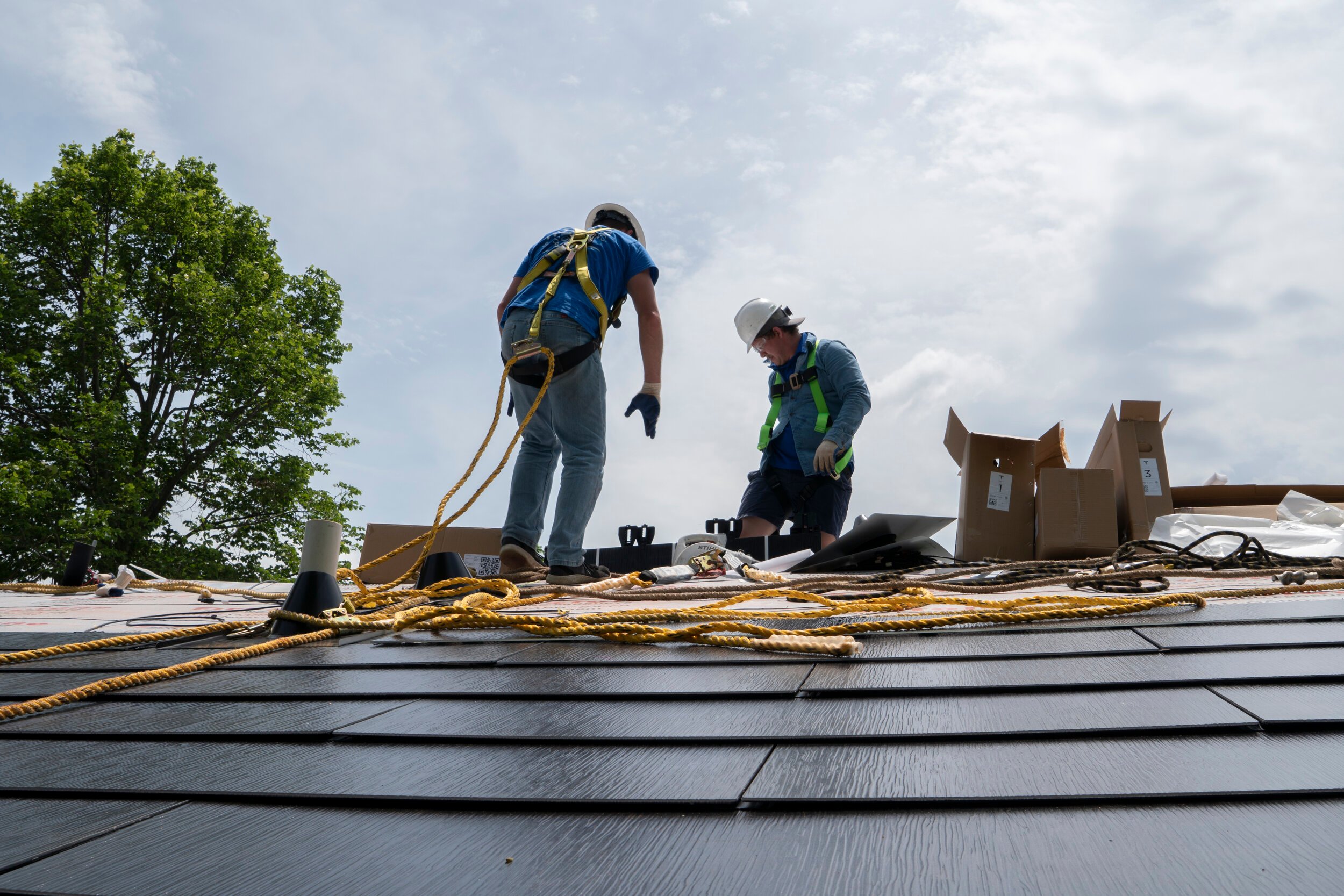
Ready to make your own power?
Get a free quote built around your roof and your last year of bills, or call and talk it through with our team.