
Our crew works out of Columbus. Solar panel installation in Columbus, Georgia, by a IntegrateSun team based here.
- Based in Columbuswith our other Georgia team in Atlanta
- 5.23 peak sun hoursa day: each kW of panels here makes about 1,403 kWh a year
- 7.2188¢ a kWhwhat Georgia Power credits for solar sent back in 2026
How does going solar work in Columbus?
About two months from signing. We file the city’s Solar Energy System Permit Application with Inspections and Code, along with an electrical one-line diagram, structural drawings and load calculations, and a site plan, and apply to Georgia Power through its PowerClerk portal. After the install, a Georgia Power meter technician runs a witness test and reprograms your meter to read both ways, and Georgia Power emails your permission to operate.
- Permit, HOA and utility. About 4 to 6 weeks.
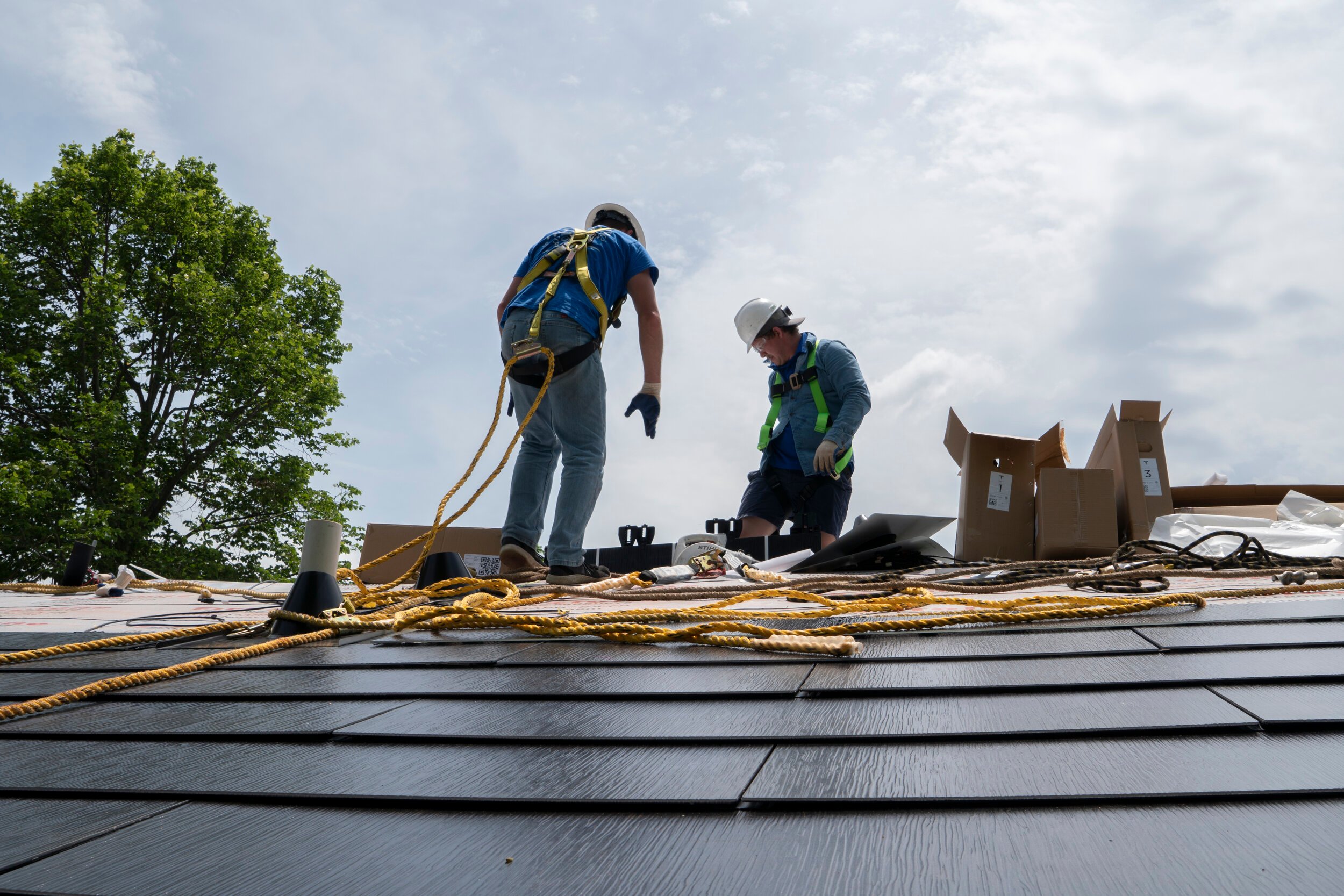
- Installation. Usually 1 to 2 days, by our crew.
- Inspection and switch-on. About 2 to 3 weeks, then the utility gives permission to operate.
In Columbus
- Permit
- A Solar Energy System Permit Application from the Columbus Consolidated Government’s Inspections and Code department, 1111 1st Avenue, 3rd floor. One form covers new systems, changes, repairs and battery additions, on a roof, the ground or a carport.
- What it needs
- An electrical one-line diagram, structural drawings with load calculations, a site plan showing the array and its setbacks, and the contractor’s state license and building license. The work has to meet the city’s electrical and building codes and the National Electrical Code.
- Fees and review
- The city’s fee schedule, effective July 1, 2024, doesn’t list a fee for solar, and no review time is published. The city’s permit pages offer no instant permit such as SolarAPP+.
- Historic districts
- In the city’s ten local historic districts, any change to the materials or look of a home’s exterior needs a Certificate of Appropriateness first. The Board of Historic and Architectural Review hears cases once a month ($50); some smaller changes go to staff instead ($20).
- Connection
- Georgia Power, for about 95% of Columbus. The application goes in through PowerClerk and you sign the interconnection agreement. A meter technician runs a witness test, then the meter is reprogrammed to read both ways. Georgia Power’s $100 interconnection fee goes on your bill once the connection is done.
- Exports
- 7.2188¢ a kWh on Georgia Power in 2026, credited as it leaves the house. Homes in the Panhandle (Flint Energies) and parts of northwest Columbus (Diverse Power) follow their co-op’s rules.
Georgia’s solar easement law
Georgia’s Solar Easement Act of 1978 lets you negotiate a written easement with a neighbor, recorded like any other easement, to keep sunlight reaching your panels. The act doesn’t limit HOA rules, so check your covenants. We handle the HOA approval for you.
Columbus Consolidated Government: Inspections and Code’s Permits and Forms page, its Solar Energy System Permit Application and Schedule of Permit Fees; the Board of Historic and Architectural Review page and Design Guidelines; the 2038 Columbus Comprehensive Plan. Georgia Power’s rooftop solar FAQ, How it Works page and RNR-11 tariff. Georgia Code §§ 44-9-20 to 44-9-23. Checked 19 November 2026.
What does solar cost in Columbus?
Find your monthly kWh on your electricity bill and read across: that’s the system a Columbus roof needs to cover 90 to 100% of your use, and its price before incentives. At the Georgia average of 1,074 kWh a month, that’s about 8.4 kW, roughly $17,600 to $21,400.
Incentives: Georgia has no state tax credit or sales tax exemption for home solar, and the 30% federal credit for homeowners ended for systems installed after December 31, 2025. So in Columbus, solar’s value is in the power you don’t buy and the credit for what you send back.
Georgia incentives in fullBy monthly use
1,074 kWhGeorgia average
System8.4 kW
Panels20
Before incentives$17,600 to $21,400
1,500 kWh
System11.8 kW
Panels27
Before incentives$24,500 to $29,800
2,000 kWh
System15.7 kW
Panels36
Before incentives$32,700 to $39,800
2,500 kWh
System19.6 kW
Panels45
Before incentives$40,900 to $49,700
Work it out for your own bill
Add up the kWh on your last 12 bills, or multiply one month by 12.
- System in Columbus
- 8.4 kW20 panels
- At one IntegrateSun project’s price ($2.08/W)
- $17,600
- At Columbus’s average ($2.53/W)
- $21,400
- Before any incentives
- $17,600 to $21,400
Sizing: Columbus’s 5.23 peak sun hours a day (PVWatts) and 440-watt panels, to cover 90 to 100% of a year’s use. Prices before incentives: one IntegrateSun project (16.72 kW, cash price) and EnergySage’s Columbus average as of November 2026. Georgia average use: U.S. Energy Information Administration, 2024. An estimate, not a quote: your roof and equipment set the real price.
What does solar sent back earn in Columbus?
On Georgia Power, which serves most of Columbus, 7.2188¢ a kWh in 2026: a 3.2188¢ solar avoided-cost rate, updated every year, plus a 4¢ adder. It’s credited instant by instant, so a sunny afternoon’s surplus doesn’t offset what you draw at night. Solar your home uses as it’s made is worth more: it saves about 12¢ to 19¢ a kWh.
We check your utility and its rates when we design your system.
Georgia Power’s rooftop solar FAQ (opens in a new tab)In the Panhandle or northwest Columbus? You may be on Flint Energies or Diverse Power instead. Flint charges a $500 interconnection fee before any equipment goes up and inspects the system before it connects. Diverse Power isn’t buying excess power from new solar members in 2026.
Georgia Power’s rules for home solar
- Netting
- Instantaneous: whenever your panels make more than the house is using, the surplus is credited as it goes out. The monthly netting pilot, capped at 5,000 customers, is closed to new ones.
- Credit per kWh
- 7.2188¢ in 2026: the 3.2188¢ solar avoided-cost rate, which Georgia Power updates each year, plus a 4¢ renewable generation adder.
- On your bill
- Both credits are added up over the month and taken off that month’s bill.
- Fixed charges
- A basic service charge of $0.4603 a day, about $14 a month, with or without solar. Two-way metering is free; single-direction metering, used on some installs, is $5.97 a month.
- Time of use
- None on the standard plan. Optional time-of-use plans charge the most from 2 to 7 PM on weekdays, June to September.
- System size
- Up to 10 kW AC for a home on RNR-11, counted by the inverters’ combined nameplate rating. Bigger systems go on Energy Offset, which has no size limit but pays nothing for power sent back.
What each kWh of your solar is worth
Used at home as it’s made
Saves about 12¢ to 19¢, the price of the power it replaces, counting the fuel charge.
Sent to Georgia Power
Earns 7.2188¢. Solar pays best when your home uses most of what it makes, or a battery holds the midday surplus for the evening.
Georgia Power’s Renewable and Nonrenewable Resources tariff (RNR-11), Residential Service tariff (R-31), How it Works page and rooftop solar FAQ, with its 2026 solar avoided-cost rate. Flint Energies’ and Diverse Power’s solar pages. Who serves which part of Columbus: the 2038 Columbus Comprehensive Plan. Checked 19 November 2026.
How much do solar panels cost in Columbus, Georgia?
About $17,600 to $21,400 before incentives for a home using the Georgia average of 1,074 kWh a month, which takes about 8.4 kW of panels on a Columbus roof. A home using 2,000 kWh a month needs about 15.7 kW, roughly $32,700 to $39,800. A quote for your own roof and equipment gives the actual figure.
Prices by monthly useDo I need a permit for solar panels in Columbus?
Yes. The city’s Inspections and Code department takes a Solar Energy System Permit Application for installing, changing or adding a battery to a solar system, with an electrical one-line diagram, structural drawings and load calculations, and a site plan showing the array and its setbacks. In a local historic district you also need a Certificate of Appropriateness. We file the permit for you.
The permit, step by stepIs my Columbus home on Georgia Power?
Most likely: Georgia Power serves about 95% of customers in Columbus, by the city’s own count. Homes in the Panhandle are on Flint Energies, and parts of northwest Columbus are on Diverse Power. Each co-op sets its own solar rules, and Diverse Power isn’t buying excess power from new solar members in 2026. The name on your bill tells you which you’re on.
What solar sent back earnsHow long does it take to go solar in Columbus?
About two months from signing. The city permit and Georgia Power’s application take about 4 to 6 weeks, our Columbus crew installs the system in 1 to 2 days, and inspection, Georgia Power’s witness test and permission to operate take about 2 to 3 weeks more. In a historic district, allow for the review board, which meets once a month.
Can I put solar panels on a house in a Columbus historic district?
Only with the city’s approval first. Columbus has ten local historic districts, including High Uptown, Wynnton Village and Dinglewood, and any change to the materials or look of a historic property’s exterior needs a Certificate of Appropriateness before work starts. The Board of Historic and Architectural Review hears cases once a month for a $50 fee, and the applicant or a representative has to attend.
How big a solar system can I put on my Columbus home?
On Georgia Power, up to 10 kW AC if you want credit for what you send back: that’s the limit for a home on its solar tariff, RNR-11, counted by the combined nameplate rating of your inverters. A bigger system goes on Georgia Power’s Energy Offset program, which has no size limit but pays nothing for surplus power. Flint Energies allows home systems up to 45 kW. We check your utility’s limit and rates when we design your system.
Will solar panels keep my power on in a Columbus outage?
Not by themselves. Grid-tied panels shut off when Georgia Power’s lines go down, so crews can work on them safely. Add a battery and the circuits you choose keep running, topped up by the panels whenever the sun is out: one Powerwall 3 runs a fridge, lights, Wi-Fi, chargers and a few outlets for about 27 hours.
How long a battery lastsDoes IntegrateSun have a crew in Columbus?
Yes. One of our installation teams is based in Columbus, and together with our Atlanta team it covers all of Georgia. Our headquarters is in Houston, at 7055 Old Katy Rd, Suite 505, Houston, TX 77024. Call (855) 999-1850 for a free quote.
Ready to make your own power?
Get a free quote built around your roof and your last year of bills, or call and talk it through with our team.