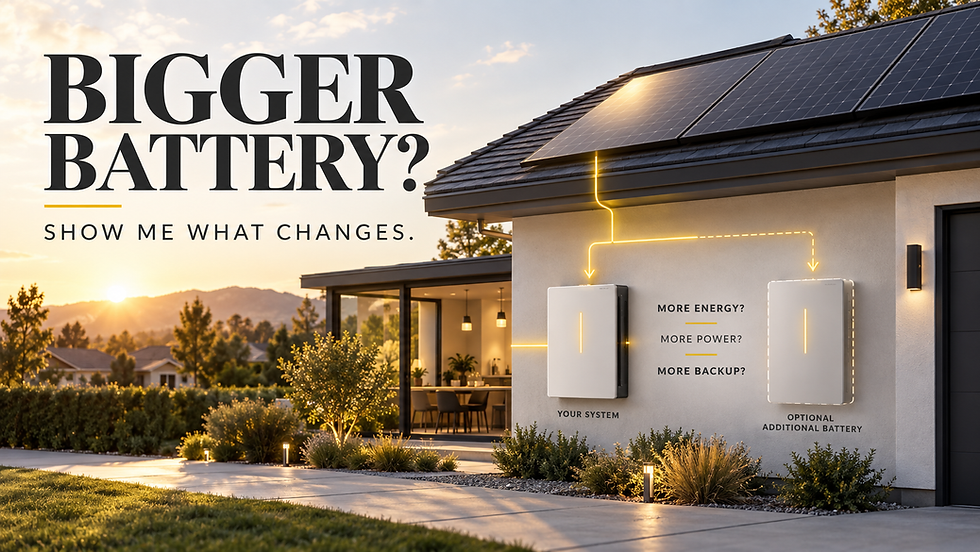
The 30% Tax Credit Is Gone. Maryland Still Has the Best Solar Deal in the Mid-Atlantic


Maryland is quietly one of the better states in the country for going solar right now. Electricity rates have climbed from 13.1 cents per kWh in 2021 to nearly 18 cents today — faster than the national average — and they're not done rising. At the same time, the state has layered meaningful financial incentives on top of each other in a way that genuinely changes the math for homeowners.
This guide covers what solar actually costs in Maryland in 2026, which incentives are still available, how a Solar PPA works for homeowners who don't want to pay anything upfront, and what to watch out for before you sign anything.
What Solar Costs in Maryland in 2026

The average solar panel cost in Maryland is $2.59 per watt as of April 2026. A 13.86 kW system runs between $30,452 and $41,200, with an average cost of $35,826.
For a more typical 10–12 kW residential system, you're looking at roughly $26,000 to $32,000 before incentives. That's the full installed price — panels, inverter, racking, permitting, and labor.
The federal 30% residential tax credit expired at the end of 2025, so that's no longer part of the calculation for homeowners who purchase outright. But Maryland has responded with state-level programs that partially offset that gap — and for homeowners who use a Solar PPA, the federal credit picture is actually different (more on that below).
Maryland Solar Incentives Still Available in 2026
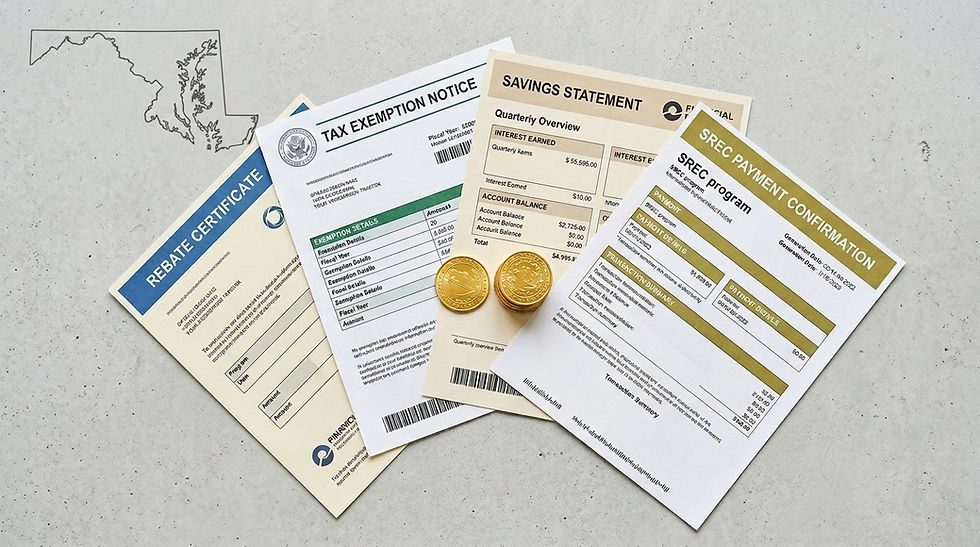
Maryland's incentive stack is more meaningful than most homeowners realize. Here's what's currently on the table:
Solar Renewable Energy Certificates (SRECs)
This is Maryland's most unique ongoing incentive. Every time your solar system produces 1,000 kilowatt-hours — roughly once a month for most homes — you earn one SREC. Maryland SRECs have sold at $60 to $80 in the last two years. For an 8 kW Maryland solar installation, the total SREC value over the life of the program is estimated around $3,600. You sell these through a broker — they handle the transaction and pay you directly. It's passive income from your roof, year after year.
Sales Tax Exemption
Maryland's Sales and Use Tax Exemption removes the state's 6% sales tax from the purchase of residential solar energy systems and equipment. On an average Maryland solar installation, this exemption saves homeowners approximately $2,000–$2,100 right off the top.
Property Tax Exemption
Adding solar panels increases your home's value — by an estimated 6.9% on average. Maryland exempts that added value from property taxes entirely, so your annual tax bill doesn't rise when your home value does.
County-Level Credits
Several Maryland counties stack additional incentives on top of state programs. Baltimore County provides up to $5,000 for residential solar installations through the Energy Conservation Devices Tax Credit. Anne Arundel County offers a one-time tax credit up to $2,500. If you're in either county, these are worth checking before finalizing your budget.
Maryland Solar Access Program (MSAP)
The MSAP offers grants up to $7,500 — structured at $750 per kW of installed capacity — for eligible homeowners meeting income requirements. The application portal is currently closed to new applications as the FY26 program budget has been fully requested. However, MEA is processing the existing queue, and a future funding cycle is anticipated. Income-eligible homeowners should keep this on their radar.
RCES Battery Storage Grant
For homeowners adding battery backup, the Maryland Residential and Commercial Energy Storage Grant Program provides the lesser of 30% of installed costs or $5,000 for residential applicants. This replaced the discontinued Energy Storage Income Tax Credit and is available through the Maryland Energy Administration on a first-come, first-served basis.
How a Solar PPA Makes This Possible With Zero Upfront Cost

Here's where this gets interesting for homeowners who aren't ready to write a $30,000 check.
A Solar Power Purchase Agreement — PPA — is a financing structure where a company installs solar panels on your home at no cost to you. You don't own the panels. Instead, you agree to buy the electricity they produce at a set rate — typically 10 to 20 percent below what your utility charges. The company owns, maintains, and monitors the system for the duration of the agreement, usually 20 to 25 years.
Why this works financially: The company installing your system is a business. That means they can claim the commercial solar tax credit under Section 48E — the same 30% credit that homeowners can no longer claim directly. They pass a portion of those savings to you through a lower electricity rate. You get cheaper electricity starting on day one without spending anything upfront.
What you're giving up: You don't own the panels. You won't build equity in the system. You won't earn SRECs — the company does, because they own the hardware. And if you sell your home, the PPA has to transfer to the buyer or be bought out, which can add friction to a sale.
The escalator clause: Most PPAs include an annual rate escalator — typically 1 to 3 percent per year. Read this carefully before you sign. At 1 percent per year, your electricity rate rises modestly and stays well below utility rates for the life of the agreement. At 3 percent, depending on how utility rates move, the financial advantage narrows significantly in later years.
Bottom line on PPAs: For homeowners who can't afford the upfront cost of ownership, a PPA is a legitimate path to solar savings with no financial risk. For homeowners who can afford to own, a cash purchase or solar loan typically delivers a higher long-term return — especially in Maryland where SRECs, county credits, and the battery storage grant are all tied to ownership.
Net Metering in Maryland: What Happens to Excess Solar

Maryland has strong net metering — one of the better policies in the mid-Atlantic region. When your panels produce more than your home uses, the excess goes to the grid and your meter runs backward. Net metering credits in Maryland can be rolled over indefinitely, which means you can overproduce solar energy in the early years and draw on those credits in later years.
This is valuable, and it's also why Maryland homeowners with PPA structures need to understand that the company — not them — is benefiting from any excess production credits. Your PPA rate is fixed regardless of what the grid pays for your surplus.
Is Solar Worth It in Maryland in 2026?
The honest answer for most Maryland homeowners is yes — but the specifics matter.
If you own your home, have a usable roof, and your electric bill is consistently above $150 a month, the combination of SREC income, the sales tax exemption, rising utility rates, and strong net metering makes the investment financially sound. Maryland solar panel installation will typically break even in 11 years under current conditions — and your panels will produce for 25 years or more.
If you're not ready to own, a PPA gets you immediate savings with zero risk. Just read the escalator clause and the buyout terms before you sign.
And if battery backup matters to you — especially after seeing how grid instability affects Maryland during summer heat events and winter storms — the RCES battery grant makes this a particularly good window to add storage while funding is still available.
IntegrateSun installs solar and battery systems across Maryland and 11 other states. We're happy to walk you through what a system would look like for your specific property — production estimates, incentive eligibility, and financing options side by side.