Easiest Way to Get Snow Off Solar Panels (What Actually Works This Winter)


If you live in a snowy area and have solar panels—or you're thinking about installing them, you've probably wondered the same thing every winter:
Do I need to remove snow from my solar panels? And if so, what's the easiest way to do it?
The short answer: In most cases, you don't need to do anything at all. And when snow does become a problem, the easiest way to automatically remove snow on solar panels isn't a rake or a gadget; it's smart system design.
Let's break down what actually works, what doesn't, and when snow removal really matters.
Key Takeaways
✅ Snow is overrated as a solar problem - Properly installed panels naturally shed most snow within 24-48 hours
✅ Installation angle beats expensive tools - A 30-35° tilt does more than any $2,000 robot ever will
✅ Production loss is minimal - Most homeowners lose only 1-3% of annual production to snow coverage
✅ Automatic removal is built-in - Dark panel surfaces + physics = free snow management
✅ Manual tools are backup only - Foam snow rakes work when needed, but you'll rarely need them
✅ Location determines strategy - Half the country needs zero snow planning
Should You Remove Snow From Solar Panels?
Before grabbing a ladder or buying a tool, it's important to understand how snow actually affects solar production, and more importantly, whether removing it makes any financial sense.
When Snow Does Not Significantly Affect Solar Panels
Here's what the solar industry doesn't advertise: snow is more of a temporary inconvenience than a crisis.
Light or powdery snow often slides off on its own once the sun comes out. Even on cloudy days, the dark surface of solar panels absorbs enough infrared radiation to warm the bottom layer of snow. Once that base layer melts just slightly, gravity takes over, and the entire sheet slides off—usually within 24 to 48 hours of the storm ending.
Solar panels can still produce electricity through thin snow layers. A dusting of 1-2 inches of powdery snow? Your panels might still generate 10-30% of their normal output. The photovoltaic cells don't need direct, unfiltered sunlight to produce some power—diffused light works too.
A few snow-covered days rarely have a noticeable impact on annual energy production. Let's run the real numbers: If you're in Pennsylvania and experience 8-10 snow events per winter, with panels covered for an average of 2 days each, that's roughly 16-20 days of reduced production. Out of 365 days, you're looking at a 4-5% impact—and that's assuming complete coverage with zero production, which rarely happens.
For most grid-tied homeowners, losing a day or two of production in winter doesn't meaningfully affect savings. Your solar system was sized for annual production, not daily perfection. Those sunny summer days when you're overproducing more than compensate for a few snowy winter days.
When Snow Removal Does Make Sense
Now, let's be clear: there are situations where snow becomes more than a minor inconvenience.
Heavy, wet snow that sticks for multiple days is different from light, fluffy snow. When you get that dense, moisture-heavy accumulation—the kind that requires a shovel instead of a broom for your driveway—it adheres to panel surfaces and doesn't slide as easily. If this sits for 5-7 consecutive days, you're now looking at actual production loss worth addressing.
Low-tilt or flat roof installations don't benefit from gravity. If your panels were installed at less than 15-20 degrees (common on commercial buildings or some residential flat roofs), snow has nowhere to go. These systems often need intervention because passive sliding simply won't happen.
Off-grid systems that rely on solar every day are in a different category entirely. When you're not connected to the grid, every day of production matters—especially in winter when battery reserves drain faster due to reduced daylight hours. Missing 3-5 days of charging can mean running your generator or rationing power, which makes snow removal financially justified.
Homes where winter production is critical for heating or backup power face similar concerns. If you're running heat pumps, electric heating, or counting on solar to maintain battery backup during winter storms, keeping those panels clear becomes a reliability issue, not just an efficiency question.
In these cases, keeping snow off solar panels becomes more important—but that doesn't mean climbing on your roof with a shovel.
The Easiest Way to Automatically Remove Snow on Solar Panels
Here's the key idea most blogs miss:
The easiest way to remove snow from solar panels is to let physics do the work.
Automatic snow removal is built into the system before installation—not added later with tools. After installing thousands of systems across 12 states with vastly different snow profiles—from Pennsylvania's 40+ inches annually to Texas's zero—we've seen what actually works. And it's not fancy gadgets.
Panel Tilt Angle: Let Gravity Do the Work

Tilt angle is the single most important factor in winter performance, and it's decided before your first panel ever touches the roof.
Steeper panels shed snow faster. A panel installed at 35-40 degrees will clear itself dramatically faster than one at 20 degrees. Why? Because once that bottom layer of snow melts even slightly, gravity needs enough angle to overcome the friction between snow and glass. At steeper angles, that critical threshold is lower—meaning snow slides with less melt required.
Ground-mounted systems outperform roof systems in snowy climates for one simple reason: you control the angle. Roof-mounted systems are constrained by your existing roof pitch (typically 18-30 degrees in most homes). Ground mounts can be set to optimal angles—often 35-45 degrees in northern climates—specifically engineered for both maximum sun capture and snow shedding.
Panels installed closer to vertical naturally slide snow off after sunrise. In extreme snow regions, some installers use winter-optimized angles approaching 50-60 degrees. At this angle, heavy snow has difficulty accumulating at all—it slides during the storm rather than waiting for post-storm melting.
In snow-heavy regions, properly angled panels can clear themselves within hours—no effort required. This is why IntegrateSun's 25+ years of installation experience across diverse climates emphasizes angle optimization during the design phase. We're not selling you removal tools later because we engineered the problem away upfront.
Panel Design Helps Keep Snow Off Solar Panels
Modern solar panels are better at shedding snow than older models, and the engineering is elegantly simple.
Dark solar cells absorb heat, even in cold temperatures. Solar panels are designed to be highly efficient at absorbing electromagnetic radiation—that's literally their job. Even when ambient air temperature is 20°F, the dark silicon cells heat up when exposed to any sunlight, including the diffused light that penetrates cloud cover. This creates a warm surface against cold snow.
Slight warmth helps loosen snow from the glass. You don't need panels hot enough to melt all the snow—just warm enough to create a thin water layer at the contact point. That microscopic melt layer acts as a lubricant, dramatically reducing the friction coefficient between snow and glass. Once friction drops, even modest tilt angles become sufficient for gravity to win.
Frameless panels don't trap snow at the edges the way framed panels can. Traditional aluminum-framed panels create a "lip" around the perimeter that can catch and hold snow, especially wet, sticky snow. Frameless designs eliminate this catch point—snow slides cleanly off the entire surface rather than getting stuck at panel edges.
This passive heat generation is one of the most overlooked ways to keep snow off solar panels automatically. No power consumption, no moving parts, no maintenance—just thermodynamics working in your favor 24/7.
Microinverters and Winter "Wake-Up"
Inverter technology also plays a role in snow management, though it's rarely discussed in these terms.
Microinverters activate earlier in low-light conditions. String inverters have a minimum voltage threshold before they'll turn on—if snow blocks enough panels in a series string, the whole string stays dormant. Microinverters, with their panel-level optimization, can activate individual panels as soon as they receive minimal light. This means even partially snow-covered systems start producing earlier.
Early morning production creates just enough warmth to release snow. When panels activate and begin producing electricity, the process generates small amounts of waste heat (even highly efficient panels convert only 20-22% of absorbed energy to electricity—the rest becomes heat). That early activation on a sunny morning following a storm can provide just enough additional warmth to trigger the snow slide you'd otherwise wait hours for.
Systems wake up faster after storms compared to older string inverters. In practical terms, this means your microinverter-equipped system might clear itself by 10 AM while your neighbor's string inverter system waits until 2 PM—a difference of several production hours multiplied across multiple snow events per winter.
That early activation can be the difference between panels staying buried all day—or clearing by mid-morning and capturing 60-70% of normal production.
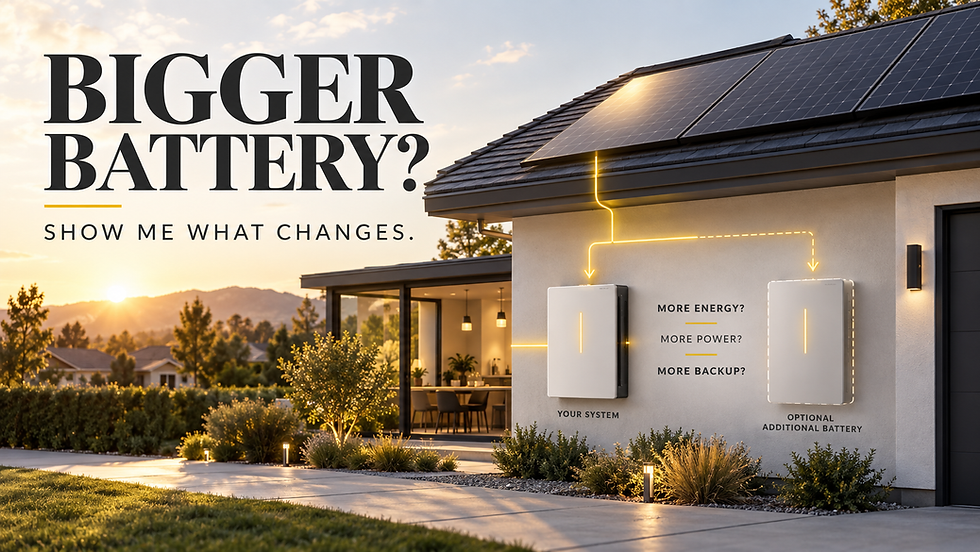
How Battery Systems Help Snow Clear Faster
Batteries aren't just for backup power—they quietly improve winter snow performance in ways most homeowners never realize.
Systems with batteries can stay active during outages. When grid power fails during winter storms (common in ice-heavy regions), grid-tied-only systems shut down completely due to anti-islanding safety requirements. They produce nothing, which means they generate no heat. Battery-backup systems can continue operating in island mode, maintaining that critical heat generation even when the grid is down.
Active systems generate small amounts of heat. Even when your batteries are fully charged and your panels aren't feeding the grid, the system stays "awake" and active. Power electronics continue operating, charge controllers maintain readiness, and this background activity generates low-level heat that radiates through mounting hardware to panel backs.
That heat helps snow loosen and slide off naturally. It's not dramatic—we're talking a few degrees of temperature difference—but in the marginal conditions where snow is almost ready to slide, those few degrees make the difference. Battery systems often clear 2-4 hours faster than battery-free systems, all else being equal.
In colder regions, batteries quietly improve winter reliability—without any manual intervention. It's a side benefit rarely mentioned in battery marketing, but noticed by anyone tracking winter production patterns closely.
Semi-Automatic Options: Can You Melt Snow Off Solar Panels?

Some homeowners look for ways to force snow removal through technology. The results are... mixed.
DIY Solar Panel Snow Melter: What You Should Know
You may see recommendations online for heating cables or DIY snow-melting systems. While they sound appealing, they come with real risks that DIY enthusiasts often underestimate.
Fire hazards are the primary concern. Roof-mounted electrical heating elements exposed to moisture, temperature cycling, and potential physical damage create ignition risk. Even "low-voltage" heating cables draw substantial current, and any short circuit in proximity to roofing materials becomes a fire threat. Insurance companies have denied claims related to aftermarket heating modifications.
Roof damage is surprisingly common. Heating cables must be secured to or near panels, which means penetrating roof membranes, drilling mounting hardware, or adhering elements with adhesives that may fail under freeze-thaw cycles. Each penetration is a potential leak point, and roof warranties often exclude damage caused by unauthorized modifications.
Reduced system efficiency matters more than you'd think. Any heating system consumes power—typically 15-30 watts per panel during operation. If you run these systems for 6-8 hours after each storm, you're consuming 90-240 watt-hours per panel—which could represent 20-50% of that day's production. You're using solar power to melt snow so you can generate solar power. The math rarely works.
Potentially voided warranties are the silent killer. Most panel manufacturers explicitly void warranties for panels modified with aftermarket heating elements or subjected to thermal stress from external heating sources. Your 25-year panel warranty becomes worthless the moment you install heating cables.
Because solar panels are designed to operate safely without added heating elements, most professional installers do not recommend DIY solar panel snow melter setups. They often cost more in long-term risk than they save in winter production. If you're determined to pursue heated panels, work with professional systems designed for solar integration—but understand you're spending thousands to solve a problem that costs tens of dollars annually in lost production.
Manual Snow Removal Tools (Only When Necessary)

If snow does linger and you decide to clear it manually, safety matters more than speed. Let's rank the tools that actually work without destroying your investment.
What Makes the Best Solar Panel Snow Removal Tool?
The best solar panel snow removal tool shares a few key traits that separate effective solutions from panel-destroying disasters:
Long reach so you can stay on the ground is non-negotiable. If you're climbing onto an icy roof to clear panels, you're accepting fall risk that far exceeds the value of recovered electricity. Tools should provide 17-21 feet of reach minimum—enough to access second-story rooftop arrays while standing safely at ground level.
Lightweight design for control matters because 15-20 feet of leverage magnifies every ounce. A tool that weighs 8 pounds at your hands creates 40-50 pounds of effective force at the panel surface when fully extended. Heavier tools lead to loss of control, which leads to cracked panels.
Non-abrasive materials to protect panel glass are essential because even tempered solar glass can be scratched by hard materials under pressure. Micro-scratches accumulate over seasons, scattering light and reducing efficiency. Premium panels can lose 1-2% efficiency per year from aggressive cleaning—snow removal should never accelerate this degradation.
The goal is to slide snow off—not scrape it. You're creating a path for gravity to finish the job, not manually removing every flake.
Best Snow Rake for Solar Panels
A good snow rake for solar panels should be purpose-built, not repurposed from general roof raking.
Telescoping design allows you to adjust length for different roof heights and collapse for storage. Cheaper fixed-length rakes seem economical until you try storing a 20-foot pole in a standard garage.
Lightweight construction means aluminum or composite materials, not wood or steel. Tools exceeding 5-6 pounds become exhausting within minutes when working overhead at full extension.
Designed specifically for roof or panel use ensures proper blade angle and material selection. Garden rakes, push brooms, and improvised tools may seem tempting, but they lack the geometry needed to slide snow without catching edges or applying downward pressure.
Avoid metal edges or stiff brushes. These can scratch panels and reduce performance over time. Even "soft" bristle brushes can trap small rocks or ice particles that act as abrasive media when dragged across glass.
Foam Snow Rake for Solar Panels: Why Foam Matters
Foam snow rakes are often the safest option for homeowners who need occasional manual intervention.
Foam edges reduce micro-scratches because the material compresses on contact rather than dragging rigid points across glass. Even if small debris is trapped between rake and panel, foam deflects around it rather than grinding it into the surface.
Gentler contact with panel surfaces means you can apply slightly more pressure when needed (for sticky, wet snow) without immediate risk of damage. This gives you margin for error that hard-edge tools don't provide.
Lower risk of damaging seals or coatings is critical for panel longevity. Modern panels have anti-reflective coatings and edge seals that can be compromised by aggressive tools. Foam minimizes stress on these vulnerable areas.
Recommended products: The Garelick Snow Roof Rake and Avalanche Roof Rake are both foam-edge designs with 17-21 foot reach, costing $50-80. For the 1-3 times per winter most homeowners might use them, they're adequate insurance against the rare heavy, persistent snow event.
Even then, manual removal should be occasional—not routine. If you're reaching for a rake more than twice per winter, something about your system design needs evaluation.
What About Solar Panel Snow Removal Robots?
Yes, they exist—and no, they're not common (yet). Let's talk about what they actually deliver versus the marketing promises.
Are Solar Panel Snow Removal Robots Worth It?
Solar panel snow removal robots are still mostly experimental, commercial-focused, and expensive for residential use. But let's be specific about why.
Current technology limitations are significant. Existing robots (SnowBot, Solar Sweeper) require permanent track installation around array perimeters. They can only travel in predetermined paths, cannot navigate around obstacles like roof vents or chimneys, and fail completely in 12+ inch accumulations or heavy ice. They're essentially motorized brushes on rails—impressive engineering, but limited scope.
Commercial applications work better than residential. Large ground-mount solar farms with uniform panel layouts, no roof angles, and maintenance budgets measured in thousands of dollars see better returns. A $3,000 robot managing 100 panels on a flat commercial array clears snow in 30 minutes without human labor. The math works at scale.
Residential barriers are substantial. Your typical residential roof has varying angles, penetrations (vents, skylights), obstacles (chimneys, dormers), and limited working space. Installing robot tracks requires roof penetrations and modifications most homeowners won't accept. More critically, residential systems typically have 15-30 panels—spreading a $2,000-3,000 robot cost across this small array means 20+ year payback periods.
Power consumption isn't trivial. Robots need charging stations, consume 50-100 watts during operation, and must be maintained (brush replacement, track cleaning, software updates). You're adding complexity to a system that should be simple.
For homeowners, the cost and complexity usually outweigh the benefits. As technology improves, this may change—but in 2025, they remain a niche solution best suited for commercial applications or wealthy tech enthusiasts who value novelty over ROI.
Our verdict: ⭐⭐⭐ Cool technology, terrible economics for 99% of homeowners. The flying car of snow removal.
How to Design a Solar System That Handles Snow Automatically
This is where most homeowners win—or lose—before installation ever happens. The decisions made during system design determine whether snow becomes a recurring problem or a non-issue you barely notice.
Why System Design Matters More Than Tools
Snow performance is determined by factors locked in during installation:
Panel angle governs whether gravity aids snow removal or works against it. This is decided by roof pitch (for roof-mount) or mounting structure design (for ground-mount) and cannot be changed post-installation without complete reinstallation.
Roof layout determines shade patterns, snow accumulation zones, and accessibility. Panels installed on south-facing roof sections clear faster than north-facing sections due to sun exposure. Eastern sections clear in morning, western sections in afternoon. These patterns are permanent.
Inverter choice affects low-light activation, panel-level optimization, and system resilience. Swapping inverters post-installation is expensive and disruptive—better to choose correctly upfront.
Whether storage is included changes how your system behaves during grid outages and impacts heat generation patterns that affect snow clearing.
Once a system is installed, your options become limited. That's why design matters more than snow removal gadgets. Every dollar spent on optimal design is worth ten dollars spent on removal tools and ongoing maintenance.
A Snow-Friendly Solar System Checklist
If you live in a snowy climate, a smart system should include these elements from day one:
✅ Adequate panel tilt (30-40° minimum in northern climates) ensures gravity assists snow shedding rather than fighting it. If your roof pitch is less than 25°, seriously consider ground-mount or ballasted systems that can achieve better angles.
✅ Modern inverter technology (microinverters or optimizers) provides panel-level control, low-light activation, and system resilience that string inverters can't match in snow-affected regions.
✅ Quality mounting hardware rated for snow load is essential—cheap rails and attachments fail under the cyclic stress of snow accumulation and release. Your mounting system should be rated for 1.5-2x your region's typical snow load to provide safety margin.
✅ South-facing orientation prioritized maximizes winter sun exposure when sun angles are lowest. East and west orientations produce less in winter and clear snow more slowly due to reduced direct sunlight hours.
✅ Proper row spacing on ground-mount systems prevents snow sliding off front rows from covering rear rows. Spacing should be 1.5-2x the panel height to avoid this cascade effect.
✅ Optional battery integration for resilience keeps systems active during winter outages and maintains the heat generation that aids snow clearing.
When these pieces are in place, snow becomes a minor inconvenience—not a recurring problem. This is exactly why IntegrateSun's approach emphasizes design consultation before installation—we're solving winter performance challenges before they become maintenance burdens.
Final Thoughts: Snow Shouldn't Stop Your Solar System
For most homeowners, snow is not a reason to avoid solar—and it's rarely a reason to climb onto your roof. The panic around snow coverage is largely manufactured by companies selling solutions to problems that barely exist.
The easiest way to get snow off solar panels is:
✅ Good system design - Optimal tilt angles and quality components eliminate 90% of snow concerns before installation
✅ Smart technology - Modern inverters and panel designs work with physics rather than against it
✅ Letting gravity and sunlight do the work - Passive snow removal through proper installation beats active intervention every time
Manual tools should be the backup plan—not the main strategy. A $60 foam rake used 1-2 times per winter is reasonable insurance. A $2,000 robot or $3,000 heated panel system rarely makes financial sense for residential applications.
The reality that few in the solar industry want to admit: properly designed systems in snow-prone regions lose only 1-3% of annual production to snow coverage. That's 3-5 days per year of reduced output, costing most homeowners $20-40 annually. Spending hundreds or thousands on removal solutions means 10-50 year payback periods—by which time your panels will need replacement anyway.
If you live in a snow-prone area, understanding how your roof, climate, and system design affect winter performance can make all the difference. A well-designed system keeps producing year after year—with minimal effort from you.
Thinking About Solar in a Snowy Climate?
At IntegrateSun, we've installed over 7,000 solar systems across 12 states with dramatically different winter conditions—from Pennsylvania's 40+ inches of annual snowfall to Georgia's near-zero snow years. Our 25+ years of combined experience has taught us what actually matters for winter performance, and what's just marketing noise.
If you're considering solar and want to understand how your roof, weather patterns, and system design will perform in winter, a simple solar assessment can clarify your options and expectations—before you install.
Get in touch with us today for a free consultation. We'll analyze your specific location, roof characteristics, and energy needs to design a system that handles winter naturally—so you're not buying snow removal tools later because we didn't engineer it right the first time.
Snow shouldn't be a mystery or a maintenance headache. With the right approach, it's just another season.
FAQs
How do you automatically remove snow from solar panels?
Automatic snow removal happens through passive solar heating where dark panel surfaces absorb heat and melt the bottom snow layer naturally. Modern panels installed at 30-40° angles combined with their heat-absorbing properties naturally shed 90% of snow accumulation within 24-48 hours after storms end. For automatic removal, proper installation angle matters far more than any tool or technology you can add later.
What is the best snow rake for solar panels?
Foam-edge roof rakes with 17-21 foot extension poles (like Garelick or Avalanche brands) are best for solar panels. The soft foam edge won't scratch panel glass or damage anti-reflective coatings, and the long reach allows you to clear rooftop panels from ground level without dangerous roof access. Cost ranges from $50-80, making them practical backup tools for the rare heavy snow event that persists beyond 3-4 days.
Is there a robot that removes snow from solar panels?
Yes, solar panel snow removal robots exist (SnowBot, Solar Sweeper) and cost $800-3,000 each. However, they only work on ground-mount or low-slope commercial arrays with permanently installed track systems. They cannot navigate typical residential roof angles, require dedicated power and maintenance, and rarely provide financial payback for homeowners. They're more common in large commercial solar farms where scale justifies the investment.
Should I remove snow from my solar panels?
In most cases, no. Snow naturally melts and slides off properly installed panels within 24-48 hours, and annual production loss averages only 1-3% even in heavy snow climates. Manual removal makes sense only if: (1) Heavy snow persists for 5-7+ days, (2) You have an off-grid battery system requiring daily production, or (3) You have a commercial array where downtime equals significant revenue loss. For typical grid-tied homeowners, the risk and effort of removal exceeds the value of recovered electricity.
Do DIY solar panel snow melters work?
DIY snow melters using heating cables or black tarps provide minimal benefit while introducing serious risks. Heating cables can void panel warranties, create fire hazards, consume 20-50% of daily production to operate, and require roof penetrations that compromise waterproofing. Black tarps or plastic sheeting offer marginal improvement (10-20% faster melting) but require dangerous roof access to position and often blow away in wind. Proper panel installation angle provides better passive melting at zero ongoing cost and risk.
How do I keep snow off my solar panels permanently?
You can't prevent snow from falling on panels, but proper installation minimizes accumulation problems: (1) Install at 30-40° tilt angle for natural shedding, (2) Prioritize south-facing orientation to maximize winter sun exposure, (3) Use frameless panels that don't trap snow at edges, and (4) Ensure adequate row spacing on ground-mount systems. These installation factors matter far more than any removal tool or system. A well-designed system naturally sheds 90%+ of snow without intervention.
Will snow damage my solar panels?
No, snow itself does not damage properly installed panels. Modern solar panels are tested to withstand 5,400 Pa of snow load, equivalent to 3+ feet of wet, heavy snow. Panels routinely handle winter snow loads without structural issues. The real damage risk comes from improper removal techniques—hard-edge shovels, pressure washers, or aggressive scraping can crack tempered glass, scratch anti-reflective coatings, or compromise edge seals. If you're concerned about extreme snow loads in your area, discuss mounting system specifications with your installer during design.