Is a 10 kW Solar System Enough for a U.S. Home?


You've received solar quotes, and installers are recommending a 10 kW system. But is that enough to cover your electricity needs? Or are you over-investing in capacity you won't use?
A 10 kW solar system is one of the most popular residential sizes in the U.S., typically generating 11,000-15,000 kWh annually, depending on your location. For context, the average American home uses about 10,500 kWh per year—but your actual usage could be significantly higher if you have electric heating, multiple EVs, or a large household.
This guide breaks down exactly what a 10 kW system delivers in real-world conditions, who it's right for, what it costs, and how battery storage affects your coverage and investment. Whether you're in sun-drenched Arizona or cloudier regions, we'll help you determine if 10 kW is the right size for your home.
Key Takeaways
A 10 kW system generates 11,000-15,000 kWh annually, varying by location, enough for most average to above-average usage homes
Ideal for homes using 900-1,250 kWh monthly (10,800-15,000 kWh/year), covering families with 3-5 occupants, EVs, or all-electric appliances
System costs range from $20,000-$30,000 before incentives ($14,000-$21,000 after federal tax credit), with battery adding $10,000-$15,000
Regional yield varies significantly: Arizona produces 15,000+ kWh/year, while Michigan generates closer to 11,000 kWh/year from the same system
Battery storage determines coverage: Whole-home backup requires 20-30 kWh capacity; partial backup (essentials) needs 10-15 kWh
What Does a 10 kW Solar System Actually Produce?
A 10 kW (10,000-watt) solar system refers to the maximum power output under ideal conditions—full sun, optimal temperature, and perfect panel orientation. Real-world production depends on several factors: location, roof orientation, shading, and seasonal variations.
Annual Production by Region

Here's what a 10 kW system typically produces in IntegrateSun's key operating markets:
High-Solar States:
Arizona: 14,500-15,500 kWh/year (4.0-4.3 sun hours/day average)
Texas: 13,500-14,500 kWh/year (3.7-4.0 sun hours/day)
California: 14,000-15,000 kWh/year (3.8-4.1 sun hours/day)
Nevada: 14,500-15,500 kWh/year (4.0-4.3 sun hours/day)
Moderate-Solar States:
North Carolina: 12,500-13,500 kWh/year (3.4-3.7 sun hours/day)
Georgia: 12,500-13,500 kWh/year (3.4-3.7 sun hours/day)
Illinois: 11,500-12,500 kWh/year (3.2-3.4 sun hours/day)
Michigan: 11,000-12,000 kWh/year (3.0-3.3 sun hours/day)
These figures assume south-facing roofs with minimal shading and modern monocrystalline panels with 20-22% efficiency. East or west-facing installations typically produce 15-20% less, while shading can reduce output by 10-30% depending on severity.
Monthly Production Patterns
Solar production isn't uniform throughout the year. A 10 kW system in Arizona might generate:
Summer (June-August): 1,500-1,700 kWh/month
Spring/Fall (March-May, Sept-Nov): 1,200-1,400 kWh/month
Winter (December-February): 900-1,100 kWh/month
This seasonal variation matters when sizing your system. If your highest usage coincides with winter (electric heating), you'll need to account for lower production during those months.
Is 10 kW Enough for Your Home? Usage Analysis

The average U.S. home uses about 10,500 kWh annually (875 kWh/month), but that's misleading—actual usage varies dramatically based on household size, climate, and appliances.
Who Benefits from a 10 kW System?
Ideal candidates:
Families using 900-1,250 kWh monthly (10,800-15,000 kWh/year)
3-5 person households in homes 2,000-3,500 square feet
Single EV owners charging at home (adds 300-500 kWh/month)
All-electric homes with heat pump HVAC in moderate climates
Above-average users wanting to offset 80-100% of electricity bills
Example scenario—Austin, Texas family:
Monthly usage: 1,150 kWh (13,800 kWh/year)
10 kW system production: 14,000 kWh/year
Coverage: 101% annual offset
Result: Near-zero electricity bills, slight excess credits
When 10 kW Might Not Be Enough
You'll likely need a larger system (12-15 kW) if you have:
Multiple EVs: Two Teslas charging at home adds 600-1,000 kWh/month
Electric heating in cold climates: Resistance heating can add 1,000+ kWh/month in winter
Large homes (4,000+ sq ft): Especially with electric HVAC in extreme climates
Pool pumps and hot tubs: Add 300-600 kWh/month year-round
Monthly usage exceeding 1,300 kWh consistently
High-usage example—Phoenix family with pool:
Monthly usage: 1,600 kWh (19,200 kWh/year)
10 kW system production: 15,000 kWh/year
Coverage: 78% annual offset
Result: Still buying 4,200 kWh/year from the utility
Using a Solar Calculator
Before committing to a 10 kW system, use IntegrateSun's solar calculator to analyze your specific usage patterns. You'll need:
12 months of utility bills to identify seasonal variations
Upcoming changes: New EV purchase, home addition, or equipment upgrades
Coverage goals: Do you want 100% offset, or is 80-90% acceptable?
The calculator accounts for your location's solar resource, roof characteristics, and usage patterns to recommend optimal system sizing. Many homeowners discover they need either more or less capacity than initially estimated.
10 kW Solar System Cost Breakdown

Understanding the total investment helps you evaluate whether a 10 kW system fits your budget and delivers acceptable ROI.
System Cost Without Battery
Total investment range: $20,000-$30,000 (before incentives)
Cost breakdown:
Solar panels (25-28 panels): $8,000-$12,000
Premium monocrystalline: $320-$450 per panel
Mid-tier options: $285-$350 per panel
Inverters: $2,500-$4,000
String inverters: $2,500-$3,500
Microinverters: $3,500-$4,000 (better performance, higher cost)
Racking and mounting: $1,500-$2,500
Labor and installation: $5,000-$7,500
Permits, inspections, interconnection: $1,500-$2,500
Electrical upgrades (if needed): $500-$1,500
After federal 30% tax credit: $14,000-$21,000
State and local incentives can reduce this further. Some states offer additional rebates, performance payments, or favorable net metering that improve ROI.
System Cost With Battery Storage
Adding battery storage significantly increases upfront investment but provides backup power and greater energy independence.
Battery addition: $10,000-$15,000
Popular battery options for 10 kW systems:
Tesla Powerwall (13.5 kWh): $11,500-$13,500 installed
Covers essential loads during outages (6-8 hours)
Good for partial home backup
Enphase IQ Battery (10 kWh): $10,000-$12,000 installed
Modular design, easily expandable
Integrates seamlessly with Enphase microinverters
Generac PWRcell (18 kWh): $14,000-$16,000 installed
Larger capacity for extended backup
Better for whole-home coverage
Total 10 kW system with battery: $30,000-$45,000 (before incentives). After 30% federal tax credit: $21,000-$31,500
Understanding "Cheap Solar Panels" vs. Quality Investment
While searching for affordable options is natural, approach "cheap solar panels" cautiously. Lower-cost panels often mean:
Lower efficiency: 17-18% vs. 21-22% for premium panels, requiring more roof space
Shorter warranties: 20 years vs. 25-30 years for quality manufacturers
Faster degradation: May lose 15-20% efficiency over 25 years vs. 10-12% for premium
Questionable manufacturer stability: Will they honor warranties in 15 years?
IntegrateSun's perspective: We prioritize value over cheap. Mid-tier monocrystalline panels from established manufacturers offer the best balance—solid efficiency (20-21%), reliable 25-year warranties, and reasonable pricing. Saving $2,000 on ultra-budget panels isn't worth it if they produce 15% less electricity over their lifetime.
Battery Storage: Whole-Home vs. Partial Backup

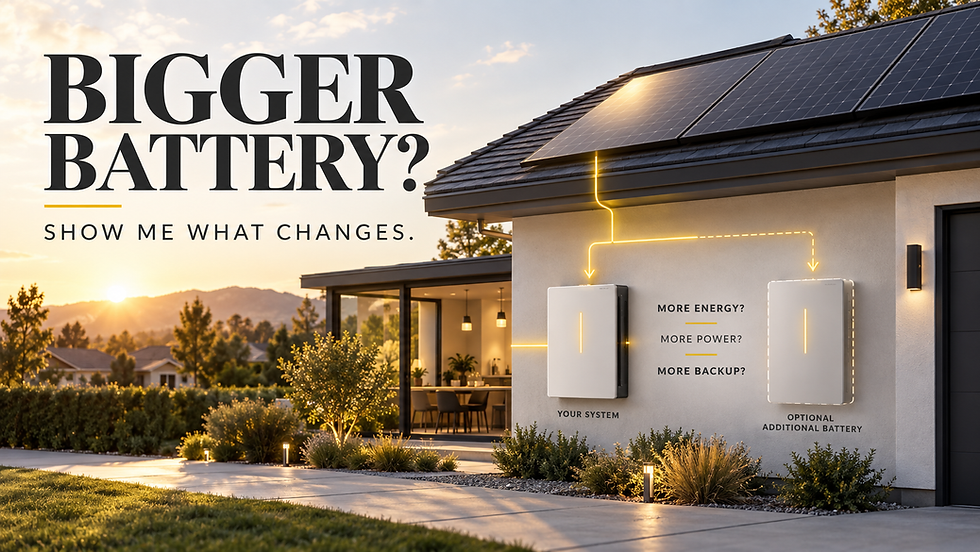
Adding battery storage transforms your solar system from a bill-reduction tool into a comprehensive energy solution with backup capability.
Partial Home Backup (10-15 kWh)
Coverage: Essential loads during outages
Refrigerator and freezer
Select lighting circuits
Internet and communication devices
Medical equipment
One AC unit or space heater
Battery requirement: 10-15 kWh (single Powerwall or equivalent) Runtime: 6-12 hours, depending on usage Cost addition: $10,000-$13,000
Best for: Homeowners wanting affordable backup for critical loads, areas with infrequent outages, or those primarily focused on bill reduction.
Whole-Home Backup (20-30 kWh)
Coverage: All circuits, normal household operation
Full HVAC operation
All appliances and lighting
EV charging (limited during outages)
Well pumps, pool equipment
Multiple simultaneous high-draw devices
Battery requirement: 20-30 kWh (two Powerwalls or larger system) Runtime: 4-8 hours of normal usage, 12-24 hours with conservation Cost addition: $20,000-$28,000
Best for: Areas with frequent outages, homes with critical medical needs, properties with well water, or homeowners prioritizing energy independence.
Solar-Only vs. Solar-Plus-Storage Economics
Solar-only system:
Lower upfront cost
Faster payback (typically 8-10 years)
No backup during grid outages
Relies on net metering for evening/night usage
Solar-plus-storage system:
Higher upfront investment
Longer payback (typically 10-14 years)
Energy security during outages
Can optimize TOU (time-of-use) rates in some markets
Greater independence from utility
The decision depends on your priorities: If minimizing upfront cost and maximizing ROI are primary goals, start with solar-only and add battery later. If backup power or energy independence matter more, invest in storage from the beginning.
What to Expect
Understanding realistic expectations prevents disappointment and helps you evaluate your system's performance.
First-Year Production
A properly installed 10 kW system should produce close to its rated annual output in year one. However, several factors affect real-world performance:
Positive factors:
South-facing roof orientation (+0-5% vs. estimates)
Minimal shading (+5-10% vs. shaded sites)
Cool ambient temperatures (+2-5% vs. hot climates)
Regular cleaning in dusty areas (+3-5%)
Negative factors:
East or west-facing orientation (-15-20% vs. south-facing)
Partial shading from trees or structures (-10-30%)
Soiling from dust, pollen, or bird droppings (-3-8% without cleaning)
High ambient temperatures (-3-5% in extreme heat)
Long-Term Degradation
Solar panels gradually lose efficiency over time. Quality monocrystalline panels degrade approximately 0.3-0.5% annually:
Year 5: 97-98% of original output
Year 10: 94-96% of original output
Year 25: 85-90% of original output
This degradation is factored into warranties. Most manufacturers guarantee 85-90% output after 25 years, meaning your 10 kW system will still produce 9.3-9.5 kW at quarter-century.
Monitoring Your System
Modern solar installations include monitoring apps that track:
Real-time production (kW)
Daily, monthly, and annual energy generation (kWh)
Individual panel performance (with microinverters)
System health alerts and error notifications
Regular monitoring helps identify issues quickly—like a failing inverter, shading from new tree growth, or soiling that requires cleaning—maximizing your system's lifetime production.
Is 10 kW Right for Your Home?
A 10 kW solar system represents a substantial but worthwhile investment for many American households. It's the sweet spot for families with moderate to above-average electricity usage who want to eliminate or dramatically reduce utility bills.
A 10 kW system makes sense if you:
Currently use 900-1,250 kWh monthly (10,800-15,000 kWh/year)
Have adequate south, southwest, or southeast-facing roof space (600-700 sq ft)
Live in a region with decent solar resources (3.0+ average sun hours)
Plan to stay in your home for at least 8-10 years
Want 80-100% electricity offset without oversizing
Consider a larger system (12-15 kW) if you:
Use 1,300+ kWh monthly consistently
Own multiple EVs or plan to add more
Have electric heating in cold climates
Anticipate significant usage increases (home addition, pool, hot tub)
Consider a smaller system (6-8 kW) if you:
Use less than 750 kWh monthly
Have limited suitable roof space
Want to minimize upfront investment
Live in a high-solar area where smaller capacity meets needs
The best approach? Start with your actual usage data, account for upcoming changes, and let production estimates guide your sizing decision. Oversizing by 10-15% provides buffer for usage increases; undersizing saves money upfront but may leave you buying supplemental utility power.
Take the Next Step
Determining whether a 10 kW solar system is right for your home requires analyzing your specific usage patterns, roof characteristics, and local solar resources. Generic recommendations often miss the mark—you need a customized assessment.
Schedule a free consultation with IntegrateSun. Our solar experts will:
Analyze your 12-month usage history to identify patterns
Assess your roof's solar potential using satellite imagery
Calculate expected production based on your location
Provide accurate cost estimates for systems with and without battery storage
Design a right-sized solution that maximizes your ROI
Whether you need a 10 kW system or a different size entirely, we'll ensure your investment delivers the performance and savings you expect.
Make an informed decision about your home's energy future. The right system size—properly designed and professionally installed—will deliver decades of reliable, clean electricity and substantial savings.
Frequently Asked Questions
How many solar panels are in a 10 kW system?
A 10 kW system typically requires 25-28 solar panels, depending on panel wattage. Modern high-efficiency panels (400W) need only 25 panels, while standard panels (360W) require 28 panels. The total roof space needed is approximately 600-700 square feet. Panel count also depends on your roof's usable space and whether you're maximizing efficiency with premium panels or using more standard-efficiency options.
What size battery do I need for a 10 kW solar system?
For partial home backup (essential loads), a 10-15 kWh battery is sufficient—equivalent to one Tesla Powerwall or similar system. For whole-home backup, you'll need 20-30 kWh of storage (two Powerwalls or a larger system). The right size depends on your backup priorities, critical loads, and how long you want to run during outages. Battery capacity should match your evening/night consumption patterns and backup goals, not necessarily your solar system size.
How much does a 10 kW solar system cost?
A 10 kW solar system costs $20,000-$30,000 before incentives, or $14,000-$21,000 after the 30% federal tax credit. Adding battery storage increases total investment to $30,000-$45,000 ($21,000-$31,500 after tax credit). Final costs depend on equipment quality, roof complexity, local labor rates, and whether electrical upgrades are needed. Regional incentives and net metering policies also affect overall ROI and payback timeline.
How long does it take for a 10 kW system to pay for itself?
Payback periods for 10 kW systems typically range from 8-12 years depending on location, electricity rates, and system costs. High-solar states with expensive electricity (California, Hawaii) see payback in 7-9 years. Moderate-solar states with average rates see 10-12 year payback. Systems with battery storage add 2-4 years to payback but provide backup value that's difficult to quantify financially. After payback, your system generates essentially free electricity for another 15-20 years.